Get Full Government Meeting Transcripts, Videos, & Alerts Forever!
Get email alerts on the Inspections topic
No spam. Unsubscribe anytime.
Labor urges commission to oppose asynchronous and virtual heat‑pump inspections
Summary
IBEW Local 6 urged the commission to resist proposals allowing asynchronous or virtual inspections for residential heat‑pump systems, warning they risk substandard installations, neighbor damage and erosion of inspection authority; staff said they will monitor state bill SP222.
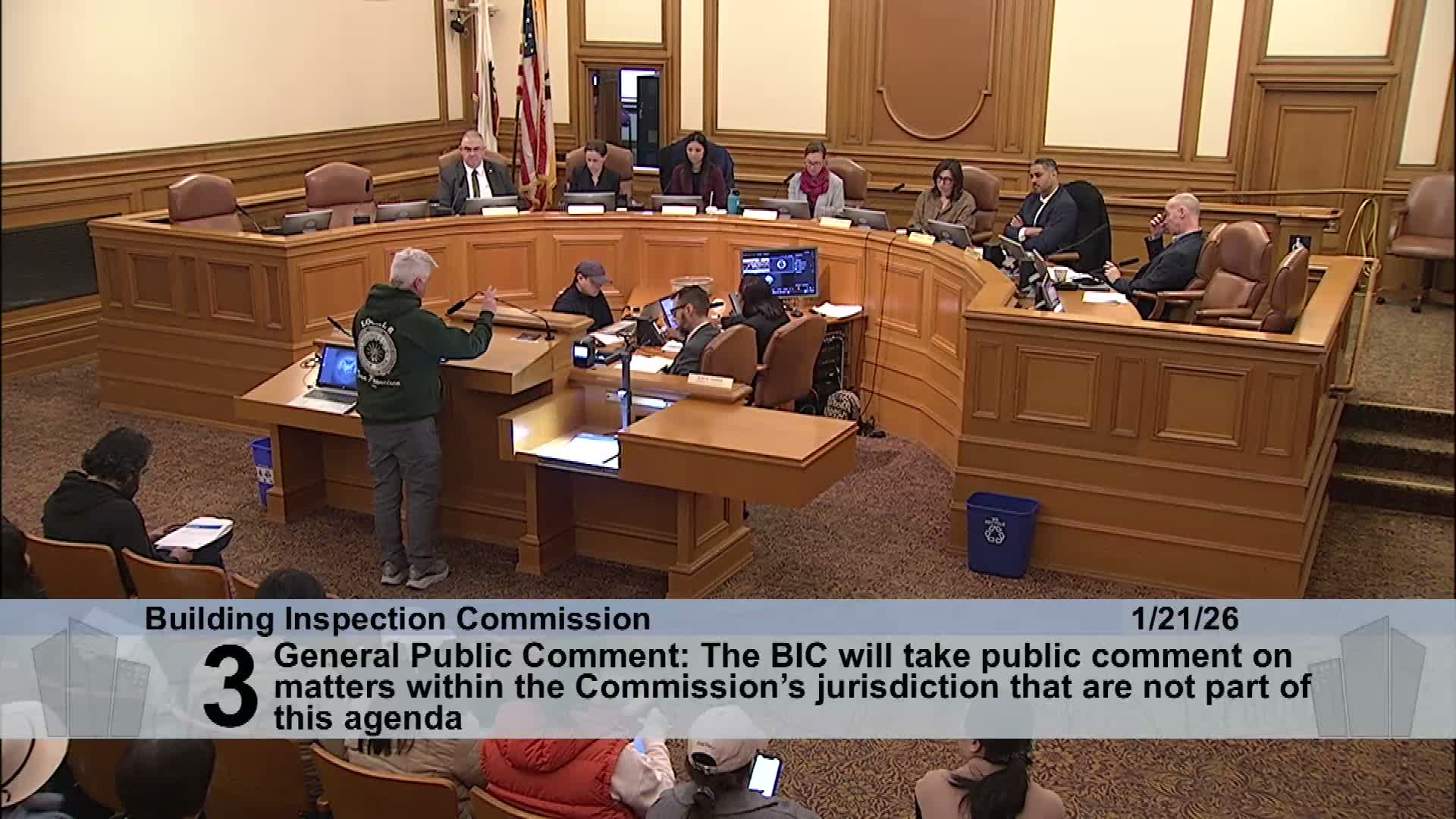
Bridal Green, representing IBEW Local 6, told the commission that proposed legislation at the state and possibly local level to allow asynchronous or virtual inspections of residential heat‑pump installations would reduce consumer protections and give unscrupulous contractors opportunities to evade proper oversight.
"This is a dangerous one at least on three levels," Bridal Green said, arguing that non‑simultaneous or virtual inspections could fail to identify faulty installations, harm neighboring properties and erode the authority of inspection divisions in building, electrical, fire and plumbing departments.
Tate Hanna, DBI’s legislative affairs manager, confirmed staff are tracking state legislation. Hanna identified SP222 — a reintroduction of last year’s SB282 — as a bill that would require asynchronous inspections, a single permit for heat‑pump systems and fee caps, and said the department will provide updates as the bill moves through committee.
Commissioners thanked the union for raising the concern and asked staff to alert the commission to material changes. Director Patrick O'Riordan agreed that the commission would be informed as any language or proposals develop and that there will be opportunities for public input on any local measures.
What to watch: SP222’s committee deadlines in late January and January 31 for house passage were cited by staff as near‑term milestones. If enacted, the committee cautioned, changes to inspection procedures could require administrative updates and possible rulemaking at the department level.