Get Full Government Meeting Transcripts, Videos, & Alerts Forever!
Get email alerts on the Budget topic
No spam. Unsubscribe anytime.
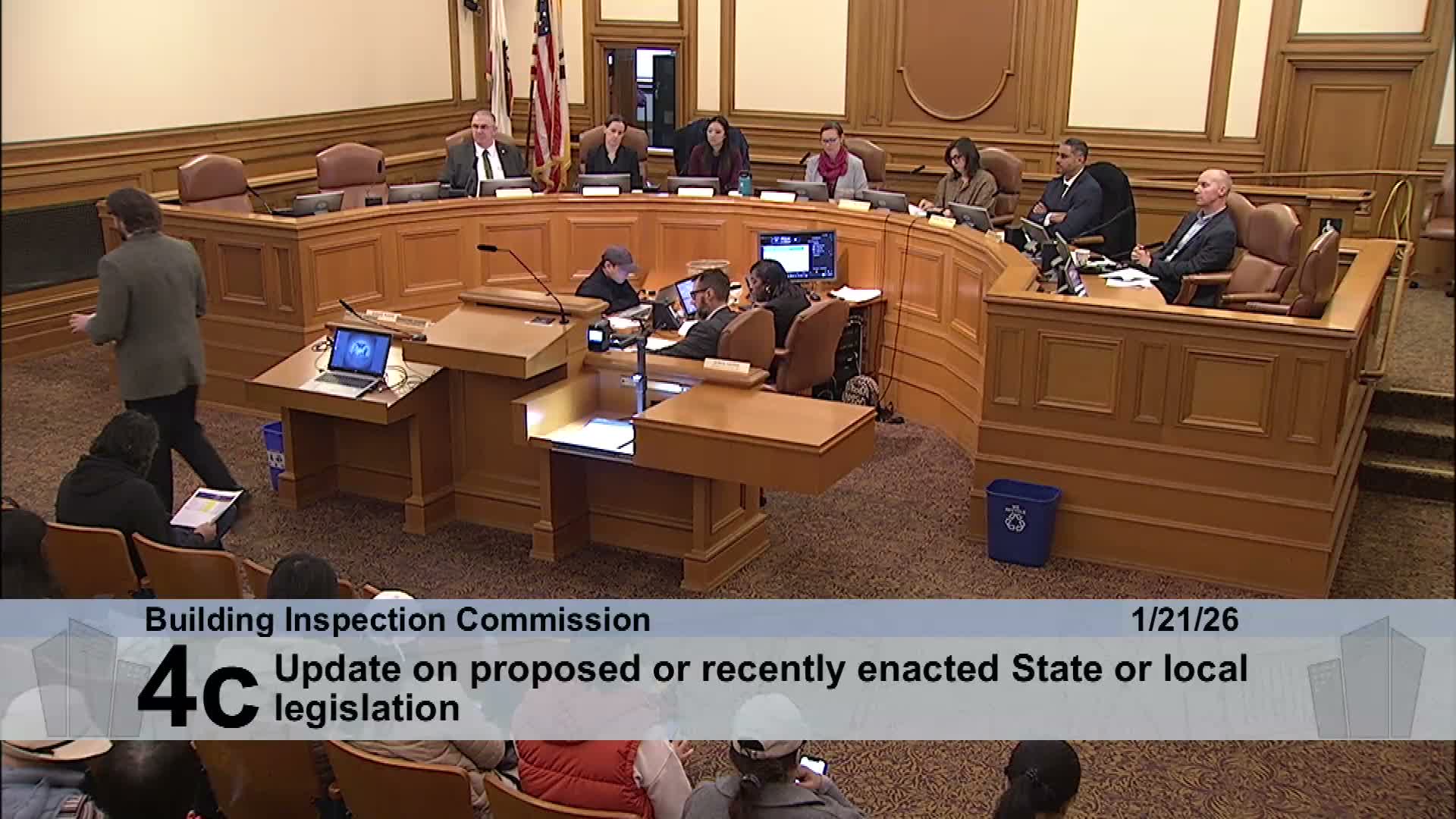
DBI projects surpluses, pushes final fee increase amid planned department merger
Summary
The Department of Building Inspection reported improved permit timeliness and reserves of about $24 million, and proposed a fourth phased fee increase to reach full cost recovery by FY27 while preparing for a potential merger with Planning and the Permit Center.
The Department of Building Inspection told commissioners on Jan. 21 that it expects to end the fiscal year with a revenue surplus and modest expenditure surplus while preparing a fourth year of fee adjustments aimed at full cost recovery by fiscal year 2027.
"We think that we will have significant revenue surplus and, modest expenditure surplus," Deputy Director Alex Koskinen said during a budget presentation to the Building Inspection Commission. He said permit volume year‑to‑date is up about 3 percent and permit valuation about 21 percent, and that plan‑review metrics have improved: first plan reviews and resubmission reviews now meet targets roughly 84 percent of the time.
Why it matters: DBI is an enterprise department funded primarily by fees. The proposal would raise fees for a range of services so charges more closely match the department’s cost of providing permits and inspections. Koskinen said the increase would be the fourth phased adjustment in as many years and is intended to eliminate the department’s structural deficit.
Key details: Koskinen outlined operational targets that the public can track on DBI’s permit portal, including a median one calendar day turnaround for over‑the‑counter permits, completeness‑letter targets of 20 calendar days, first comments in 30 calendar days and resubmission responses in 14 calendar days. He said a recent improvement in average days to issuance moved a median from 168 calendar days to 86 calendar days over the last 12 months.
OpenGov and implementation costs: The department is replacing its legacy permit tracking system with OpenGov. Koskinen estimated the citywide implementation at about $15 million over three years, with DBI’s share roughly $5 million. To support the transition, the department asked to fund a temporary technology expert position from reserves; Koskinen said the position is expected to persist through the implementation period and then sunset.
Reserves, vehicles and staffing: DBI reported roughly $24 million in reserves. The budget includes requests to replace about 10 aging vehicles at roughly $45,000 apiece, emergency‑response training, and additions to a disaster coordination unit and complaint processing staff. Koskinen said many technical changes are still being finalized and that the mayor’s recent announcement about a potential merger will require further work on organizational and funding structures.
On a possible merger: Director Patrick O'Riordan reiterated the mayor’s plan to combine DBI, Planning and the Permit Center to improve coordination. "This merger is the next step forward in DBI’s long journey," he said, but cautioned that voters will ultimately need to approve any charter changes and that many implementation details remain to be worked out.
What’s next: The commission will continue budget hearings (special meeting Feb. 11; regular meeting and final budget review Feb. 18) and DBI will return with updated line‑item entries and any changes prompted by mayoral phase and the OpenGov rollout.