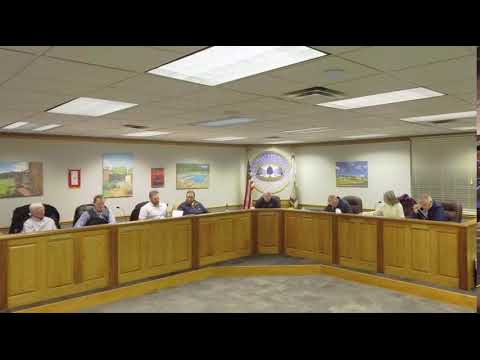
WVU Parkersburg updates Vienna campus: childcare, workforce programs, housing plans and next steps
Loading...
Summary
Dr. Tory Jackson and Lindsey Pearsall told the Vienna City Council that the WVU Parkersburg campus redevelopment has opened childcare, expanded workforce programs (including an AWS cloud credential), and is planning housing and roadway work tied to a proposed elementary school; water/sewer and builder details remain pending.
Dr. Tory Jackson and Lindsey Pearsall of the Economic Development Authority gave a detailed update on the WVU Parkersburg/Vienna campus redevelopment, describing recent openings, program expansion and next steps for utilities and housing.
Jackson and Pearsall said the childcare facility opened Dec. 8 and is licensed for 130 spots; they reported roughly 100 children are currently enrolled and that two rooms were temporarily out of service due to a burst pipe caused by cold weather but are being repaired. Jackson said the campus now hosts multiple short-term credential programs (certified medical assistant, phlebotomy, HVAC and others) and announced a two-year cloud computing credential in partnership with Amazon Web Services scheduled for 2026. She also said the engineering technology program has been relocated to the Vienna campus as a '2+2' pathway with WVU-Morgantown.
On housing and infrastructure, presenters described a conceptual layout for ancillary land around the campus that 'could be' about 75 single-family lots plus multifamily units, but emphasized final lot count, home sizes and pricing remain to be determined once a preliminary engineering report on water and sewer returns. Jackson said the foundation will apply to the West Virginia Water Development Authority for funding and that Parkersburg Utility Board is expected to serve water and sewer to avoid higher costs to Vienna.
The presenters said the Wood County Development Authority received a congressional earmark of $1,250,000 that funded installation of windows and doors (the presentation referenced roughly 460 windows and 32 doors) and that HUD closeout paperwork is pending. Jackson reported a total investment to date of $24,000,000 by the foundation and said the campus already accommodates 160 students in academic programs with a projection to reach 300 within two to three years; on the workforce side the foundation expressed a longer-term goal of 700 participants.
During council Q&A members pressed on housing affordability and builder strategy. Pearsall answered that Vienna does not qualify for certain federal subsidies such as low-income housing tax credits, making unsubsidized affordable housing challenging; she said final home prices will depend on utility and infrastructure costs and that the foundation prefers working with a single developer to build multiple lots rather than parceling lots individually. On connectivity, presenters described a planned roadway connection to 12th Street (near Sam’s Club and Lowe’s) that will include sidewalks and potentially a bike trail, noting some elements are contingent on design and funding.
Council members praised Jackson and Pearsall’s work and asked for follow-up items; the city of Vienna said it will host a Vienna Public Library mobile satellite in the dorm area to provide students with on-site library resources.
Presenters asked for council support on near-term steps: a roadway bid expected in March, finalization of water/sewer engineering, and the drafting of land covenants for future housing. Several items — housing price ceilings, lot sale strategy and final utility-cost allocations — remain to be determined and were presented as contingent on forthcoming engineering and funding work.