Get Full Government Meeting Transcripts, Videos, & Alerts Forever!
Get email alerts on the Performance Incentives topic
No spam. Unsubscribe anytime.
Utilities and advocates split on performance incentives, tests to measure program benefits
Summary
At the PSC EMPOWER hearing, utilities pushed for a PIM tied to societal cost test outcomes to encourage innovation, while the Office of People's Counsel and some advocates opposed rewarding utilities for meeting statutory goals and urged strict conditions or penalties.
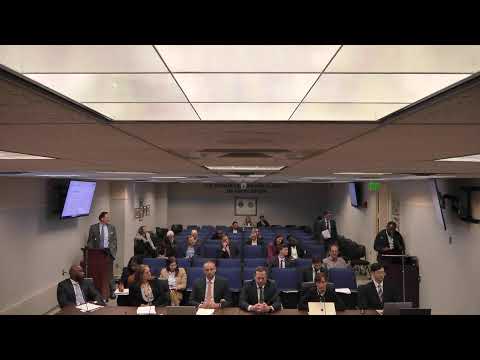
A long‑running debate over whether to introduce performance‑based incentives (PIMs) for EMPOWER programs took center stage at the Public Service Commission’s Nov. 17 hearing.
Michael Jang (staff) summarized the cost‑recovery work group's options and observed disagreement over which cost‑effectiveness test should govern reward or penalty determinations. Exelon utilities and supporters urged the Commission to use the Maryland societal cost test (SCT) and adopt an “emerging” PIM structure that is reward‑oriented and designed to encourage innovation around climate goals. Jessica Yu (BGE) said a well‑designed PIM could “promote innovation and promote state climate goals.”
The Office of People's Counsel reiterated opposition to any reward that compensates utilities for statutory compliance and recommended a reward only above 100% achievement of the metric; OPC also proposed that rewards be subject to scrutiny on bill impacts and the ratepayer impact measure. “We would ask that any reward be based on achievement in excess of a 100% of the metric,” Nicole Zeigler told commissioners.
Utilities argued that the statute contains aspirational goals and that rewards help motivate continued innovation as targets grow more challenging. Exelon cautioned against combining EMPOWER PIMs with other PIM discussions in rate cases and asked for clear timing to adopt PIM elements so utilities can incorporate them into 2027–2029 planning.
The Commission asked multiple parties to clarify technical issues — including concerns about double counting, interaction with the bill stabilization adjustment and how a PIM would function absent penalties in practice — and requested additional written detail and modeling. No final PIM decision was made; staff and parties will continue work‑group negotiations and the Commission signaled a preference for resolving PIM design and evaluation baselines early in the cycle planning timeline.