
Bill to bar foreign nationals from funding ballot measures draws questions on scope, penalties and look‑back
Get AI-powered insights, summaries, and transcripts
Subscribe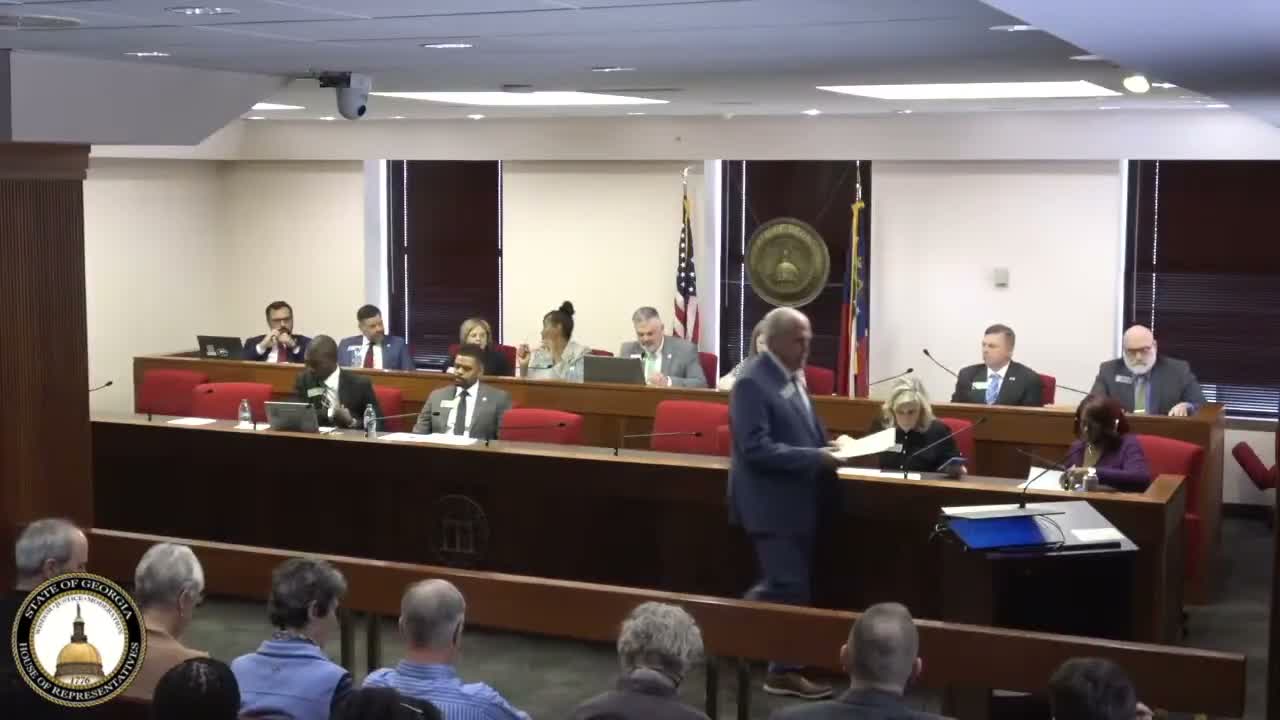
Summary
Chairman Martin introduced HB963 to extend prohibitions on foreign contributions to ballot questions; the draft mirrors federal definitions, creates a four‑year, $100,000 look‑back safe harbor and would add enforcement—members and witnesses urged narrowing the bill and clarifying penalties and definitions.
Chairman Martin presented House Bill 963 as model legislation to extend existing prohibitions on foreign nationals' campaign contributions to statewide and local ballot measures and constitutional amendments. "Foreign nationals cannot contribute to our campaigns," he said, and the bill would "mirror state law with the federal prohibition" to prevent outside parties from influencing ballot referenda.
Martin told committee members the draft uses federal definitions for lawful permanent residents and foreign nationals and includes a four‑year look‑back that preserves participation for organizations that received less than $100,000 from the specified sources. He said the safe-harbor was intended to avoid immediately disqualifying organizations that unknowingly received de minimis amounts.
Committee members and witnesses pressed the bill on several points. Representative Adesanya asked whether there was evidence of foreign money influencing Georgia ballot measures; Martin said he could not confirm specific instances but cited litigation and experience in other states as the impetus to clarify a perceived gray area. Representative Roberts asked about penalties; Martin and staff said the bill does not change existing penalties but would provide administrative reporting and enforcement language, and legal staff described uncertainty in how federal law treats ballot initiatives compared with candidate elections.
Common Cause Georgia and other witnesses said they broadly supported preventing foreign influence but urged narrowing the language to target foreign governments or foreign‑controlled entities and to limit indirect or preliminary activity that could sweep in lawful, local civic participation. Kyle Gomez Lineweber said the bill should focus on "direct spending and direct control" and voiced concern the draft could unintentionally affect small immigrant‑owned businesses that contribute or provide in‑kind help to local ballot campaigns.
The subcommittee held the bill for further drafting and discussion; no vote was taken.