Committee hears broad SNAP overhaul in HB 947; author seeks tighter verification, data matching and EBT security

Agriculture & Consumer Affairs · February 12, 2026

Get AI-powered insights, summaries, and transcripts

Subscribe
AI-Generated Content: All content on this page was generated by AI to highlight key points from the meeting. For complete details and context, we recommend watching the full video. so we can fix them.

Summary

In a hearing on HB 947, the bill author and the Department of Human Services outlined provisions to tighten SNAP eligibility verification, require monthly/quarterly data-matching across state and federal sources, introduce chip-and-PIN EBT cards and limit certain categorical eligibility expansions; DHS said Georgia’s payment error rate is high and automation and funding will be needed to meet new requirements.

The Agriculture & Consumer Affairs committee heard testimony on House Bill 947, a multi-faceted proposal to tighten administration and program integrity for the Supplemental Nutrition Assistance Program (SNAP) in Georgia.

Representative Monaghan, presenting a committee substitute (LC 461433), said the bill’s aims are to modernize eligibility and verification, strengthen program integrity, and align state practice with federal law. “This bill does 3 very big things,” Monaghan told the committee: modernize eligibility and verification, strengthen program integrity and accountability, and improve fraud deterrence and EBT security.

Key provisions described in the hearing include tighter verification timelines and shorter certification periods for households deemed high risk, requirements for continuous and scheduled data matches with multiple state and federal sources (Department of Public Health, Department of Labor, Department of Corrections, Social Security and other datasets), a prohibition on granting categorical eligibility based on non–cash-in-kind benefits unless required by federal law, and limiting state income/resource standards relative to federal standards beginning Jan. 1, 2026.

Monaghan also described technology and retailer measures: authorizing chip-and-PIN EBT cards, requiring Georgia-issued EBT cards to display a participant’s legal name and a USDA SNAP fraud hotline, and directing the department to issue guidance and requiring point-of-sale controls so retailers cannot accept benefits for certain prepared beverages and foods.

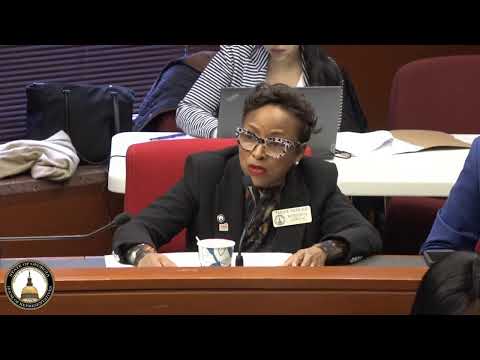
Candace Bose, introduced as commissioner of the Department of Human Services, told the committee Georgia currently serves about 1.4 million SNAP recipients with an average monthly benefit of $393 and that the state’s calculated payment error rate is among the highest in the nation (recently cited at about 15.5%). Bose warned that high error rates could trigger federal financial consequences: “If we don't get our payment error rate down to under 6%, the state will have to pay a percentage of the overall amount of benefits issued,” she said, urging investment in technology and staff to meet new verification requirements.

Committee members pressed for details on impacts and costs. Representatives asked whether SSI recipients or elderly/disabled households would be carved out from restrictions on buying prepared foods (commissioner and author said the prepared-food limitation reflects existing federal limitations and cannot be altered by state statute), how data-matching and point-of-sale compliance would be funded, and whether the state can obtain more flexibility from federal regulators to automate verification processes. DHS said cost estimates were being developed and emphasized the need for federal flexibility to expand automation.

Supporters of certain provisions pointed to program integrity and preventing trafficking and benefit theft; critics warned that stricter limits could harm families living in food deserts and burden small retailers. The hearing ended with committee leaders noting that HB 947 is a work in progress and that staff and agency follow-up (including cost estimates and implementation questions) will be needed before committee action.

Because HB 947 was presented as a hearing in this session, the committee took no final vote on the bill during this meeting.