
Senators Push Review to Tackle Chinese-Linked Vehicle Software, Supply‑Chain Risks
Get AI-powered insights, summaries, and transcripts
Sign Up Free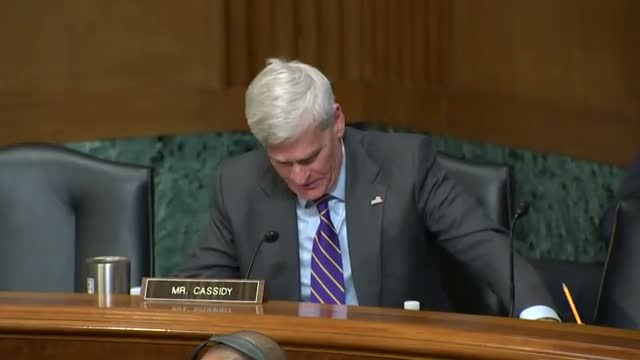
Summary
Senators at a committee review pressed witnesses about whether the trilateral review with Mexico should explicitly restrict Chinese-made connected-vehicle components and autonomous-vehicle software, and whether export controls and stronger enforcement can stop illegal transshipments into U.S. supply chains.
Senator Cassidy pressed committee leaders and witnesses on whether the trilateral review should adopt explicit restrictions on Chinese-made vehicle components and autonomous-vehicle software that he said could "report back to the CCP." He framed the discussion as a national-security concern tied to vehicle supply chains that cross the U.S.-Mexico border.
The question comes as lawmakers weigh economic-security provisions in a bilateral or trilateral review. "I predict that the economic security improvements and discussions in this review will be of the highest priority," Chairman Brady said, adding that the review creates a forum to address transshipments and investment-screening concerns.
Cassidy asked industry representatives how protections would be implemented when parts or software are built or assembled in Mexico and then shipped into the United States, noting differences between land and sea shipment documentation. "So should we have explicit restrictions on Chinese manufactured connected vehicle components and autonomous vehicle software?" he asked.
Mr. McCarthy, identified in the hearing as speaking for industry interests, emphasized enforcement rather than new blanket prohibitions: "...is the need for strong enforcement and the importance of, again, continuing this trilateral agreement so that we have this framework to ensure that strong enforcement," he said, and added that Commerce and the administration had already taken steps on what he called "sensitive technology." He also said illegal transshipment is a major concern for businesses and stressed the need for a level playing field.
Committee discussion also touched on export controls for semiconductors and AI chips. Chairman Brady said members of Congress had raised those issues and called the review an opportunity to bring them to the ambassador and the administration for discussion.
No formal action or vote was recorded on specific export-control measures during the exchange. Committee leaders said the reviews would provide a forum to raise the questions and work with relevant agencies.
The committee hearing moved next to fisheries questions; committee leaders said the trilateral review could be used to raise a range of implementation and enforcement questions with U.S. and Mexican officials.