Get Full Government Meeting Transcripts, Videos, & Alerts Forever!
Get email alerts on the Personnel Evaluation topic
No spam. Unsubscribe anytime.
Forest Hills board presses for objective superintendent and treasurer evaluations; majority, minority clash
Summary
At the Sept. 25 Forest Hills Board of Education meeting, board members debated replacing a subjective 39-question survey with an OSBA-aligned, job-description-based evaluation for the superintendent and treasurer; proponents cited contract obligations and research, while opponents said legal counsel approved the current process.
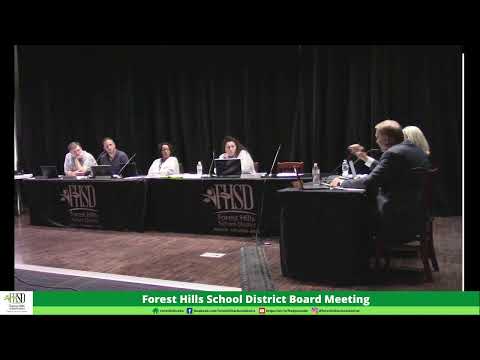
Forest Hills Board of Education members spent the bulk of their Sept. 25 meeting debating whether to replace the district’s current, survey-based evaluations for the superintendent and treasurer with a multi-source, job-description-aligned process.
Board members who proposed the change said the district is contractually obligated to evaluate those positions using objective, verifiable evidence and mutually agreed goals. “Evaluation needs to be aligned with the job description,” said Dr. Simmons, citing research and state guidance. “It needs to be objective — fact based — and multi‑pronged.”
Dr. Strickler and other proponents said Forest Hills historically used an Ohio School Boards Association (OSBA)–aligned tool and a consultant-supported, multi-page system that tied evaluation criteria to the job description and to measurable evidence. They argued the current instrument — a 39‑question survey that emphasizes dispositions such as “poise” and “grooming” — is subjective and leaves the board without defensible, data-driven grounds for reappointment decisions.
“Without rigorous information, we should not be making decisions at this time,” Dr. Strickler said, noting the treasurer’s contract expires July 31, 2025, and warning that replacing a treasurer without evidence could be costly and disruptive. Presenters pointed to neighboring districts that struggled to recruit high‑caliber treasurers and proposed a five‑step timeline of goal‑setting, midyear checks and a June summit for a full evaluation.
Opposing members said they had consulted legal counsel and believed the current evaluation practice did not violate board policy. “I am fine with the evaluation system that we have in place and I don’t wish to change it,” said Board President Jonas, who told the body she had discussed the matter with legal counsel.
Tensions rose as board members debated whether the disagreement reflected policy interpretation or broader dysfunction. One member said they would abstain from any vote on reappointments conducted under the current evaluation system. Proponents said such a stance would make unanimous personnel decisions unlikely and stressed the need for a public, transparent process aligned to state guidance and the district’s job descriptions.
Administrators and board members recommended next steps focused on collaboration: finalize job‑description alignment, set annual SMART goals with the superintendent and treasurer, develop measurable action steps, complete a midyear assessment and conduct a year‑end multi‑source evaluation. The board did not take a formal vote to change its evaluation instrument at the meeting.
The board indicated it will follow up publicly and in committee work to develop or adopt a standardized evaluation plan that provides objective evidence for future contract decisions.