Get AI Briefings, Transcripts & Alerts on Local & National Government Meetings — Forever.
Tennessee Supreme Court Hears Metro Nashville Challenge to 2023 Council-size Law
Summary
Metro Nashville urged the Tennessee Supreme Court to strike or limit parts of a 2023 law (Public Chapter 21) that caps metropolitan council membership at 20, arguing the statute's transition mechanics and an exemption clause render it unconstitutional as local legislation; the state defended the law as a generally applicable cap and urged affirmance. The court recessed after first argument.
NASHVILLE ' The Tennessee Supreme Court heard argument in a challenge by the Metropolitan Government of Nashville and Davidson County to a 2023 law the state says limits all metropolitan councils to 20 voting members.
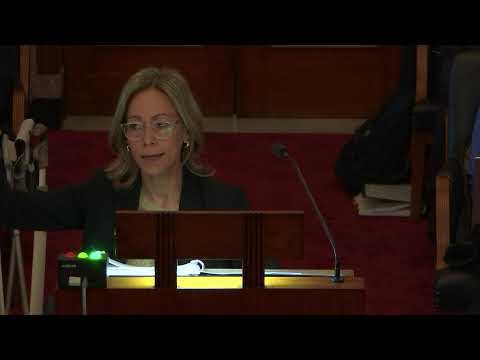
Lisonbee Bussell, counsel for Metro Nashville, told the court the statute at issue (referred to in argument as Public Chapter 21) cannot be saved by judicial rewriting and that the General Assembly's drafting effectively "chips away" at local sovereignty. "The drafting strategy the law at issue here, public chapter 21, presents new and interesting constitutional issues," Bussell said, arguing the act's language and the Tennessee Constitution's exemption clause must be read together rather than ignored.
Bussell urged the justices to view the statute through the court's precedents on local legislation, saying Leach v. Wayne County governs where a provision treats a single metropolitan government differently. She argued that subsection 1(a) of the act must be read in light of the act's implementation mechanism in subsection 1(b) and that under Metro Nashville's reading the challenged relief (the reduction timetable and mechanisms) now is moot because those timing provisions have expired.
Madeline Clark, representing the state appellees, responded that the General Assembly adopted the law after surveying local governments and concluding smaller councils work better. "Section 1 limits the membership of every metropolitan council in the state to 20 voting members," Clark said, pressing the bench to treat subsection 1(a) as a general rule that applies statewide and to read subsection 1(b) as implementation detail that does not make the act local in form or effect.
Clark told the court that even if subsection 1(b) contains mechanisms aimed at Metro Nashville, the act as a whole applies the same substantive rule to hundreds of local governments and therefore does not run afoul of the Constitution's local-legislation clause. She asked the court to affirm the lower-court ruling.
Justices asked numerous questions about how to read the exemption clause in the Tennessee Constitution, the historical record from the 1977 convention, and how the court's precedents such as Leach and Berson apply when a statute contains transitional provisions. Counsel debated whether the case is moot as to some relief because timing-based transition steps have expired, and whether the court should apply the public-interest exception to resolve disputed constitutional questions that may recur.
Counsel repeatedly emphasized different remedies: Metro Nashville warned against judicially 'fixing' a statute the legislature could amend; the state suggested municipal charter amendment remains an available path to change council size. Counsel also referenced related proposed legislation filed recently addressing the same statutory language; both sides acknowledged the proposed bill is not part of the record.
The argument included factual context used by counsel: supporters of Metro Nashville's position noted that when the 1977 convention adopted the exemption clause Metro Nashville's council had about 40 members, which influenced delegates' intent; the state highlighted that the challenged act applies a cap to dozens or hundreds of localities across Tennessee.
The court recessed after argument and said it would return to hear the remaining two cases on the docket after the break.