
Vermont committee debates H.385 coerced-debt protections as advocates and lenders clash over process and fraud safeguards
Get AI-powered insights, summaries, and transcripts
Sign Up Free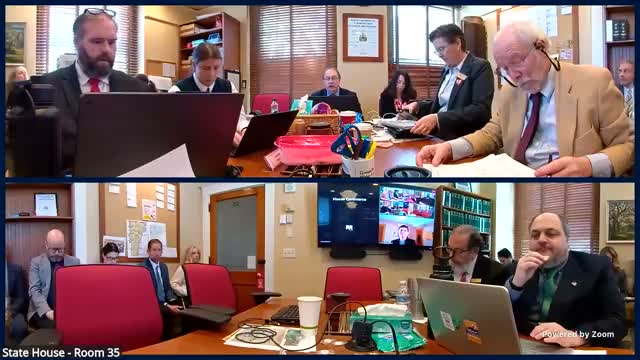
Summary
Lawmakers heard hours of testimony on H.385, a bill aimed at giving survivors of domestic abuse, human trafficking and exploitation a streamlined path to clear coerced debt. Advocates urged keeping a court-backed external review (option 1); banks and credit unions warned the bill as drafted could invite fraud, shift losses to member institutions, and need clearer ways to pursue perpetrators.
Montpelier — The Vermont House Committee on Commerce & Economic Development spent its Friday session scrutinizing H.385, a bill that would let people seek relief from debt incurred through coercion in contexts such as domestic abuse, human trafficking or exploitation of vulnerable adults.
Legislative counsel Maria Royal walked members through draft 1.1 and highlighted key changes to definitions, creditor duties, confidentiality, and the statute of limitations. She explained two central approaches for creditors after receiving a debtor’s coerced-debt statement: either the creditor must stop collection and seek court enforcement when necessary (the advocates’ option 1), or the creditor may review the claim and resume collection if it disputes the claim (option 2).
Advocates urged the committee to adopt the court-backstop approach. Grace Pazden, director of the Consumer and Homeowner Rights Project at Vermont Legal Aid, said the bill would create an accessible, nonlitigious path for many survivors. Citing a client example, Pazden said an older, developmentally disabled woman was coerced into cosigning a vehicle loan that resulted in a more-than-$10,000 deficiency and required more than a year and 100 attorney hours to resolve. "The creditor can just unilaterally decide to dispute it and resume collection," Pazden said, warning that option 2 would "entirely undermine the purpose of the bill and eviscerate any meaningful access to relief for victims." She pointed to a statewide legal-needs assessment showing most Vermont defendants in consumer-debt cases lack counsel and argued that, without option 1, many victims would remain unable to obtain relief.
Domestic-violence advocates echoed that position. Charlie Glesserman, policy director for the Vermont Network Against Domestic and Sexual Violence, praised language adding abuse-related identity theft to the bill and urged safeguards in suspicious-transaction holds that avoid alerting abusers. "That is the most dangerous time in a survivor's life," Glesserman said, describing the risk if a financial institution notifies a spouse or other family member when a victim attempts to withdraw funds to flee abuse.
AARP Vermont’s advocacy director, Dawn Hilliard, told the committee she supports the report-and-hold approach and urged mandated training for institutions, explicit language permitting banks to report suspected exploitation to law enforcement or adult protective services, and anonymous reporting to the Department of Financial Regulation to improve data and training.
Financial-industry witnesses asked for clearer fraud safeguards, operational rules and ways to recover losses from perpetrators. Carrie Allen, president of the Association of Vermont Credit Unions, expressed support for relief in principle but said retroactive relief and gaps in mechanisms to hold perpetrators accountable raise concerns for member-owned credit unions. "When losses fall solely on credit unions that acted in good faith, the result is that neither justice nor deterrence is meaningfully advanced," she said.
Chris Delia, president of the Vermont Bankers Association, said his industry cannot support draft 1.1 as written. Delia described worries that the bill would shift significant costs and legal risks to financial institutions, that creditors may be required to absorb charge-offs without a clear path to pursue perpetrators, and that the market impacts are unknown if the bill provides look-back relief for outstanding debt. He pledged to provide the committee with a short list of issues that would need resolution for industry support.
Receivables Management Association International outside counsel Donald Maurice urged clarity for national compliance and credit-reporting systems, recommending precise linkage between an official report and a coerced-debt claim to avoid unintended triggers for routine identity-theft reports.
Committee members questioned witnesses on procedural details: whether the debtor’s written statement must be sworn, what combination of corroborating materials should be required, how secured collateral is handled when it cannot be located, and whether the bill’s notice and language provisions could expose creditors to liability if they fail to use a debtor’s preferred language. Maria Royal noted the draft proposes a discovery-rule statute of limitations, allowing actions within six years of discovery or of coercion’s end, and an effective date that would apply to debts outstanding as of 07/01/2028.
The session produced no formal votes; testimony focused on the core policy choice about creditor response. Advocates uniformly favored option 1, a process that pauses collection and allows external or court review, arguing it balances accessibility for survivors and protections for creditors. Lenders favored clearer evidentiary thresholds, operational safeguards and mechanisms that make pursuing perpetrators feasible so that financial institutions do not bear uncompensated losses.
The committee asked stakeholders to keep working toward compromises and scheduled additional meetings next week to continue negotiations. Chair (unnamed) said the committee hopes to reconvene and have a draft ready for a vote by the following Friday. The bill will move next to the Judiciary Committee for legal review of adjudication and enforcement questions.
What’s next: stakeholders will exchange redlines and a short list of outstanding issues; the Commerce & Economic Development Committee will continue the conversation in advance of sending the bill to Judiciary for further legal work.