Get Full Government Meeting Transcripts, Videos, & Alerts Forever!
Get email alerts on the Transfer Station Funding topic
No spam. Unsubscribe anytime.
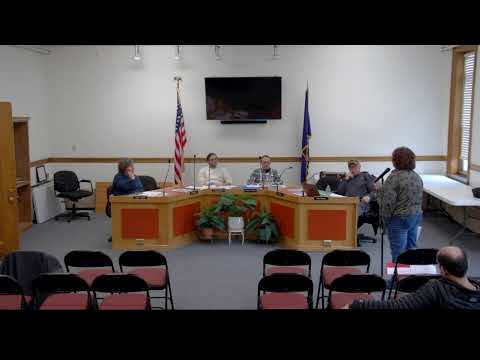
Skowhegan weighs shifting transfer-station costs as tipping fees rise under Waste Management contract
Summary
Town participants reviewed a transfer-station report showing commercial haulers account for roughly 75% of station bills and that the town's Waste Management contract will raise tipping fees through 2028; officials discussed user-fee options (paper-bag system, charging haulers, curbside pickup) and called for a feasibility study before budget season.
Skowhegan town participants met to review transfer-station operations and rising disposal costs after staff presented a contract summary showing scheduled increases from $78.50 per ton for municipal solid waste today to $90.50 per ton by July 1, 2028.
The session focused on who pays. "When the trash gets picked up at the hospital and goes to waste management, we're paying it," Speaker 1 said, describing how the town ends up billed for some large commercial and institutional customers. Speaker 3 noted that fees paid for commercial haulers represent about 75% of the transfer-station budget while residential loads account for less than 20%, creating a distributional concern for property taxpayers.
Why it matters: the contract with Waste Management runs through June 30, 2029, and includes annual scheduled rate increases. Speaker 1 summarized the current and future schedule: $76.50 a ton for MSW plus a $2 state fee (current total $78.50/ton), rising to $82.25/ton on 07/01/2026 and continuing to $90.50/ton on 07/01/2028. Those increases, participants said, will push the town to examine alternatives to the current property-tax–funded model.
Options discussed included charging commercial haulers directly, adopting a paper-bag (pay-as-you-throw) system, or moving to curbside pickup. "There's a glaring loophole here where folks are exploiting that and it's falling on the burden of folks who... are paying property tax," Speaker 4 said, urging the group to consider user fees that would better align costs with who creates the waste.
Participants flagged practical complications. Several speakers said commercial packer trucks commonly collect a mix of customers—including businesses, apartments and residences—making it difficult to isolate school or residential tonnages for billing. Speaker 1 said school cardboard is separated at the schools, but packer-truck routing mixes many generators in a single load. The group recommended improved data collection on dumpster volumes and school waste to design equitable cost-sharing.
Next steps: members agreed a multi-year feasibility study and a third-party analysis would be useful before making policy changes. Speaker 3 recommended a formal cost-benefit analysis to model whether shifting costs to haulers or residents (via bags or curbside subscription) would reduce overall town spending and how it would affect rents and low-income residents. "That's why I am basically here to provide all this information...before budget season comes," Speaker 1 said.
No formal motion or vote was recorded at the session; participants framed the discussion as information-gathering ahead of the budget process.