Get Full Government Meeting Transcripts, Videos, & Alerts Forever!
Get email alerts on the Open Meetings topic
No spam. Unsubscribe anytime.
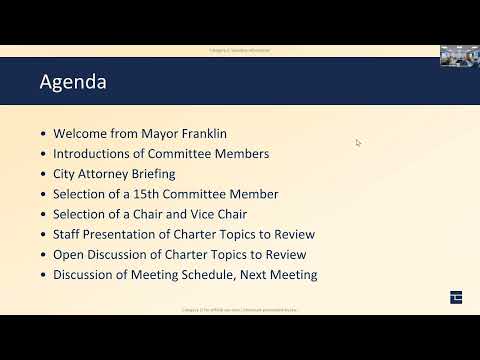
Deputy city attorney briefs Everett charter reviewers on records and open‑meetings rules
Summary
Ramsey Rammerman, deputy city attorney, told the newly formed Charter Review Commission that most committee communications and deliberations are public records and warned that serial off‑line discussions can violate the Open Public Meetings Act; he advised practical steps for handling emails, texts and social media.
Ramsey Rammerman, the City of Everett deputy city attorney, told the Charter Review Commission that the Public Records Act covers a broad set of materials and that commissioners should presume communications tied to committee business are public. He said emails, text messages and social media posts related to commission work can be subject to public records requests and recommended forwarding committee correspondence to city staff (Jennifer) for retention.
Why it matters: The PRA and the Open Public Meetings Act (OPMA) set the legal floor for how the commission must operate. Rammerman said inadvertent or deliberate off‑line deliberations among a majority of members — through email, text chains or sequential conversations — can meet the legal definition of a meeting and risk voiding decisions or triggering penalties.
Rammerman emphasized the PRA’s intent and practical effects. "Trust is the coin of the realm," he said, and described the PRA as "a tool to garner public trust." He warned commissioners that "anything that you create while serving in your role on this committee is a public record," and that personal devices and non‑city email accounts do not shield material from disclosure. He also noted that the city will not be issuing individual city email accounts for commission volunteers because of license costs and recommended creating a dedicated personal account or forwarding committee‑related messages to Jennifer so staff can retain an official copy.
On meetings and deliberations, Rammerman explained that the OPMA defines a meeting broadly: "action" includes discussion or deliberation by a majority. He described "serial meetings" as a string of communications that, combined, involve a quorum and said they are illegal because they create substantive collective intent outside an open meeting. He summarized potential consequences: final actions taken in violation of the OPMA can be voided, and knowing violations can expose individuals to fines (he described statutory fines for knowing violations).
Commissioners asked practical questions about records retention and how to handle drafts, texts and executive sessions. Rammerman said most exemptions are narrow; deliberative‑process or privileged legal advice exemptions are the only likely exceptions that might temporarily withhold material, and he recommended conservative handling and early coordination with staff. He advised commissioners to avoid using text or social media for substantive committee business and to forward records to staff when in doubt.
What’s next: Rammerman offered follow‑up help by email and encouraged commissioners to contact him or staff with records‑management questions as the commission begins work.