Get Full Government Meeting Transcripts, Videos, & Alerts Forever!
Get email alerts on the Local Government Accessibility topic
No spam. Unsubscribe anytime.
New Spokane council members emphasize accessibility and plan consent‑agenda overhaul
Summary
In a Council Connection interview, Council President Betsy Wilkerson and newly elected Council Members Sarah Dixon (D1) and Kate Tellis (D2) said increasing access and clarity in city government is a priority; Dixon said she will introduce an ordinance to change how the consent agenda is labeled and organized.
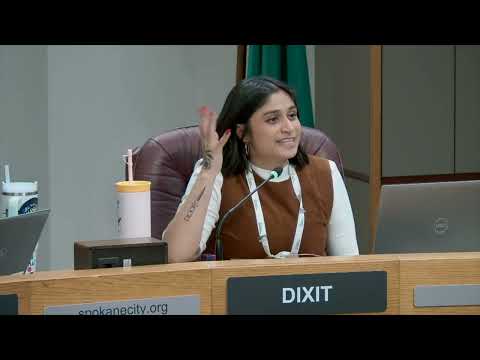
Council President Betsy Wilkerson hosted a Council Connection conversation with newly elected Council Members Sarah Dixon, who represents District 1 and chairs the equity subcommittee, and Kate Tellis of District 2. Both said their priorities include making city government easier for the public to navigate and increasing outreach to residents who do not typically participate in council meetings.
Dixon, a longtime community organizer, said her experience working with constituents drove her to run for office and to accept the equity subcommittee chair role. "Being a part of the community really showed that there's a lot of different ways to be involved," she said, and added that local government "can really serve its community or really not." She said she wants to simplify language and processes so more people can participate meaningfully.
Why it matters: Council members said large, hard‑to‑read agenda packets and legalistic language discourage public engagement. Wilkerson noted packets can run to hundreds of pages — "that could be 900 pages as well" — and both council members argued clearer labels and organization could lower the barrier to participation.
Dixon described an immediate next step: she said she will bring forward an ordinance to change how Spokane presents its consent agenda and how items are organized. She suggested replacing the opaque label "consent" with clearer categories such as "reports, contracts, and claims" and organizing consent items by committee so residents can more easily find and follow topics that matter to them. "So even just the word consent to what it actually is, which is reports, contracts, and claims, can just be a clear way of describing what we're voting on," Dixon said.
On language in policies, Dixon recommended swapping legalistic terms for plainer words where appropriate. "I was joking with our policy advisor, Chris Wright, about the use of the word 'shall'... but in terms, I think 'must' is just as good," she said, arguing clarity helps nonlegal readers understand obligations.
Both council members described outreach and relationship building as central to their approach. Tellis pointed to District 2's active neighborhood councils and framed her role as a facilitator: listening to what residents ask for and bringing feasible ideas back to city hall. Dixon cited a recent Homeless Connect event as an example of community collaboration that she wants to replicate.
The program included references to representation and "firsts." Wilkerson remarked on historic firsts on the council; Dixon said she is "the first Indian American woman as a council member in the city." Those characterizations appeared adjacent in the recorded conversation and reflect how speakers framed representation during the interview.
What happens next: Dixon said she will draft and introduce the proposed ordinance to change the consent‑agenda labeling and organization; no formal motion or vote was taken during the recorded segment. Wilkerson encouraged residents to engage with council materials online and watch future Council Connection episodes.