
Spokane climate advisory board forwards draft climate policies to Plan Commission, asks for added habitat-inventory consideration
Get AI-powered insights, summaries, and transcripts
Sign Up Free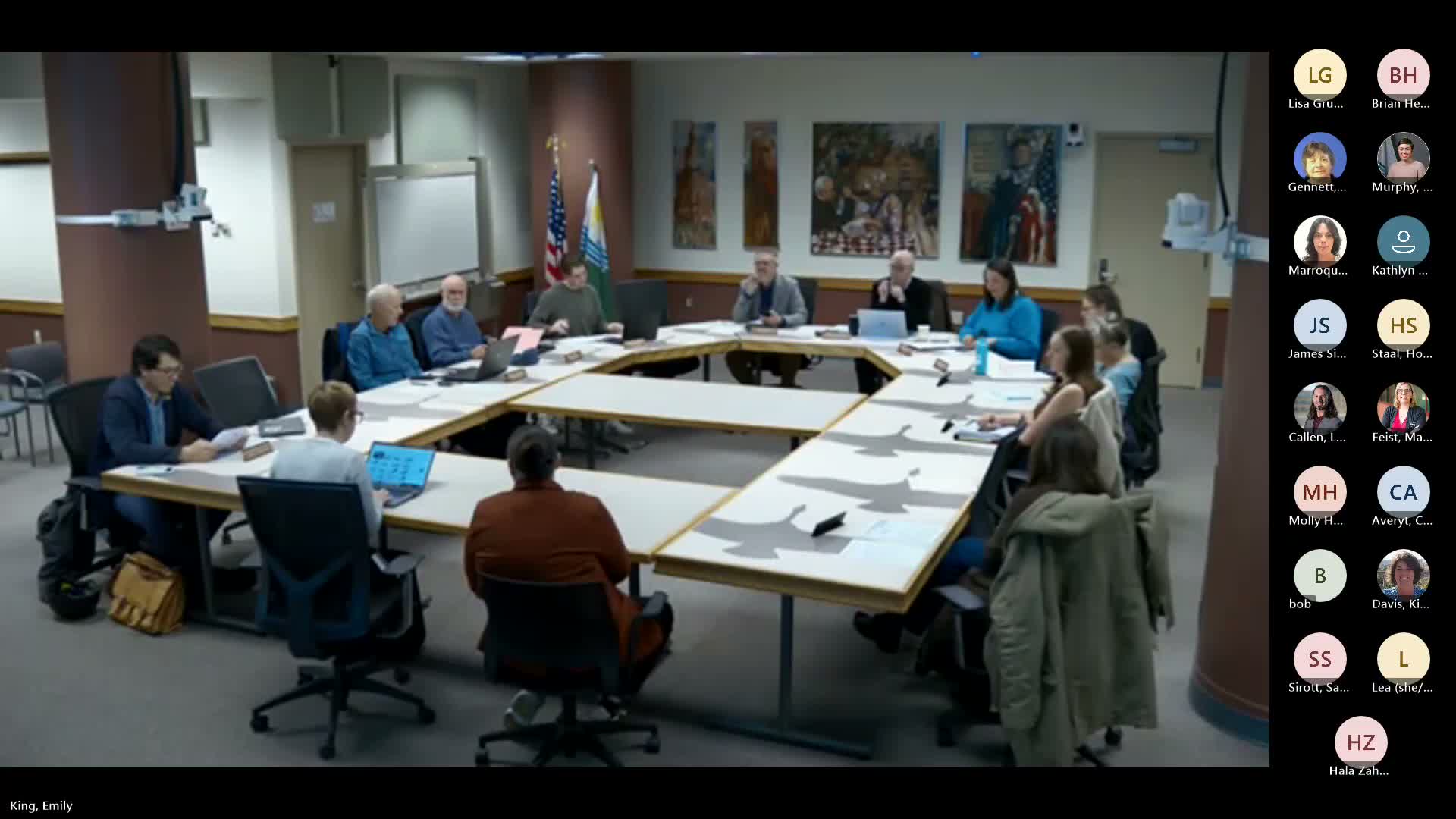
Summary
The Climate Resilience and Sustainability Board voted unanimously to recommend final climate policies (CRSB recommendation 2026-001) to the Plan Commission and asked that the Plan Commission consider an additional public-comment proposal for a natural-lands and habitat-connectivity inventory.
The Climate Resilience and Sustainability Board voted unanimously on Feb. 12 to recommend that the City of Spokane Plan Commission include the board’s draft final climate policies, outlined in the Feb. 12, 2026 memorandum, in the 2026 periodic update of the city’s comprehensive plan.
The motion, introduced during a public hearing, also authorizes the CRSB chair to prepare and sign a written decision consistent with the board’s rules. During the meeting the board accepted a second, companion motion asking the Plan Commission to consider language submitted orally at the hearing by Spokane Urban Nature proposing an inventory and rubric for identifying natural lands and habitat connectivity in the city’s geographic information system.
Why it matters: The recommendation advances the integration of climate policy into Plan Spokane 2046 and moves policy language on emissions reduction and resilience forward in the city’s update process. The board emphasized that its action is a recommendation to the Plan Commission and not the final step; the package will proceed through the Plan Commission review and later to City Council consideration as part of the comprehensive-plan update.
At the hearing, staff summarized the process that led to the recommendations: a Phase 1 climate risk and vulnerability assessment, broad community engagement in 2025 (staff reported more than 3,700 climate-related contacts last year), and Phase 2 policy development and prioritization. Staff said the board narrowed an initial set of policies to a clean list of 66 primary policies across sectors for forwarding to the Plan Commission.
Public testimony included an in-person comment from a Spokane Urban Nature representative who urged the board to add language creating "an inventory of existing and potential natural lands and fish and wildlife habitat evaluated for their ecological and climate resilience values," and to make that data available in the city’s GIS for decision-makers and the public. Staff and several members discussed whether that language should be appended as a friendly amendment or forwarded as a separate recommendation; the board ultimately voted to forward the policy packet and to ask the Plan Commission to consider the public comment as supplemental language for NE 11.4.
Board process and votes: The board handled the hearing under Robert’s Rules, allowed public comment (one written comment was read into the record), and then debated the motion. The motion to forward the Feb. 12 memorandum’s climate policies passed on a roll-call vote with all voting members recorded as "Aye"; two members were absent. A subsequent motion to adopt the full recommendation (including authorization to sign a written decision) and to forward Spokane Urban Nature’s suggested language to the Plan Commission also passed unanimously.
What happens next: Staff said the Plan Commission will review the board’s recommendation and integrate the climate policies into the comprehensive-plan update. After the Plan Commission completes its integration work and the environmental impact statement is concluded, the package will proceed to City Council later in the year for adoption.
Quotes and attributions are from testimony and board discussion recorded at the Feb. 12, 2026 CRSB hearing.