Get Full Government Meeting Transcripts, Videos, & Alerts Forever!
Get email alerts on the Housing Short Term Rentals topic
No spam. Unsubscribe anytime.
Green Bay council refers short‑term rental rules back to staff after hours of testimony
Summary
After several hours of public testimony for and against tighter limits, the Green Bay Common Council voted to reject immediate minimum‑stay and maximum‑days caps and referred a revised short‑term rental enforcement and regulation package back to staff for co‑creation with alderpersons, the STR Alliance and community stakeholders.
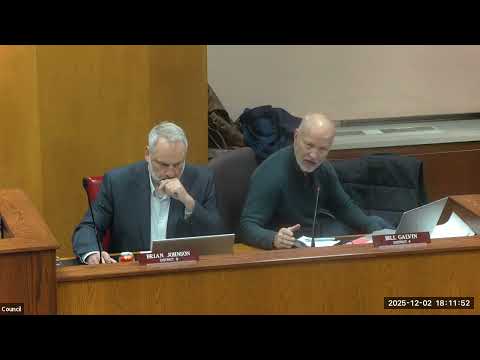
After more than three hours of public comment and council debate, the Green Bay Common Council on Tuesday referred major short‑term rental policy work back to city staff rather than imposing firm new minimum stays or a maximum number of days for rentals.
Alder Brian Johnson moved an amendment that removed two high‑visibility options — a seven‑day minimum stay and a 180‑day annual cap — from consideration in this legislative cycle and asked staff to work with alderpersons, short‑term rental operators, the Equal Rights Commission and community members to produce a tighter, enforceable ordinance and enforcement framework. The council adopted Johnson’s amendment by voice vote and then voted to adopt the ordinance package as amended and refer the STR items to staff for revision.
The referral responds to two recurring council concerns: neighborhood nuisance enforcement and the broader housing‑availability question. Alder Jennifer Grant, who proposed a three‑part referral amendment earlier in the meeting, asked staff to produce: 1) a standardized neighbor notification letter to be sent when a new short‑term rental permit is issued or renewed; 2) a short, required set of house rules operators must post on listings and inside units; and 3) a plan to modernize noise‑ordinance enforcement tools. Director Dave Renierwig told the council he needs clear direction about scope and timetable, but said staff can work with stakeholders to tighten enforcement language and the violation process.
Speakers from both sides urged the council to be cautious. Neighbors and housing advocates told the council that STRs reduce the stock available for long‑term residents and can contribute to rising rents in a city with very low vacancy. Several speakers urged restoring a 7‑day minimum or a 180‑day cap to curb investor conversions and protect affordability. Short‑term rental managers and members of the Green Bay STR Alliance countered that many owners are local, that existing regulatory tools already address most problems, and that operators can help enforce neighborhood standards if given clearer, implementable rules. The Alliance presented data they said show a 93% reduction in police calls on a sample of permitted listings after operators implemented standards; other residents challenged both the sample and the direction of causation.
Council members said the referral aims to co‑create rules staff can enforce, rather than rush prescriptive policy. Several members asked staff to return with a clearer violations/strike definition (what constitutes a "strike"), recommended due‑process language similar to other permit revocations, and asked for a realistic timetable — with some suggesting January or early next year as a target for draft changes. The council also asked staff to coordinate the work through relevant committees (protection & policy, planning commission, and Traffic/Bike/Ped as appropriate).
What happens next: staff will meet with alderpersons and stakeholder groups to draft specific ordinance language and enforcement processes, then route those proposals through the appropriate committees before returning to the full council for final action. The council did not adopt a numerical cap or minimum stay at this meeting; instead it asked staff to build an enforceable, community‑vetted approach to reduce nuisance properties and clarify enforcement rights and remedies.
Quote — opponent: "Short‑term rentals are a cancer and must be stamped out before it kills our civic body," testified David Badillo, urging stricter limits. Quote — proponent: "We can create accountability and protection for neighbors without eliminating the benefits of tourism," said Mark Danan of the STR Alliance.
Ending: The council’s referral pauses immediate adoption of strict stay limits and directs staff to return with a refined enforcement and regulatory proposal co‑developed with local stakeholders. The item was referred to staff by voice vote and will return following committee review and staff drafting.