Get Full Government Meeting Transcripts, Videos, & Alerts Forever!
Get email alerts on the Water Supply topic
No spam. Unsubscribe anytime.
Cedar City council authorizes up to $12,000 to modify sewer laterals so a nearby farm well could serve as municipal water
Summary
After a lengthy technical briefing on state well‑protection rules and costs, the council approved a motion to authorize up to $12,000 for sewer‑lateral work so a farmer‑owned well producing about 1,200–1,250 GPM could be converted for municipal use if subsequent tests and negotiations succeed.
Cedar City council members voted Oct. 15 to authorize up to $12,000 to modify sewer laterals and related work needed for a nearby farmer‑owned well to meet state protection standards, in a step toward possibly acquiring the well for municipal use.
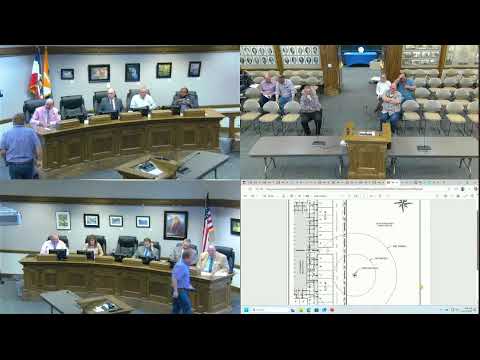
City engineering staff and developers briefed the council on a well (referred to in the meeting as the Clermont/Clamont Adams well) west of a proposed residential development. Staff said chemical testing meets state limits and the well had a grout seal to 105 feet that "meets the state regulation," but that state administrative rules for culinary wells require a 50‑ to 100‑foot protection radius. That protection radius can impose special material and installation standards for sewer laterals and other underground infrastructure.
Jonathan Stathis of the city engineering department said his recent conversation with state regulators identified sewer laterals as the "main concern": "They said that was their main concern was the sewer laterals," he said. Staff described two cost drivers for bringing the site into compliance: changing sewer laterals already installed within the protection zone and building pump/chlorination infrastructure and piping to tie the well into the city system.
Developers estimated the cost to replace or fuse the sewer laterals already buried outside building footprints at roughly $10,000–$12,000 if done now as part of construction; doing the work later — after paving and slab pours — would be substantially costlier because of demolition and rework. Staff also flagged additional potential costs for modifications under building footprints if the state requires the same specification there; those interior costs were not yet available and staff said they would seek firm bids.
Council discussed funding pathways: staff said exploration and acquisition work could come from the city's $4,000,000 exploration fund but that moving money from that fund into an active budget would require public notice and a budget amendment. Council members debated risk — if the city waits the opportunity could be lost as development proceeds — versus the possibility of spending funds and not completing a purchase. A drawdown test (monitored by the state) was noted as the next technical step to verify sustainable production and pumping limits.
After discussion, a council member moved to approve up to $12,000 to change the laterals now and to reimburse the developer at a later date if the acquisition completes; a second was recorded and members voted in favor. The motion passed and staff were asked to return with firm bids and clarification of any interior piping requirements.
Next steps: staff will pursue drawdown testing, get hard bids (engineering and plumbing) and return to council with clarifications about required materials and a proposed funding adjustment if acquisition proceeds.
Vote: motion to authorize up to $12,000 to address sewer lateral work — moved by Speaker 13, seconded by Speaker 9; outcome recorded in the transcript as passing with members saying 'Aye.'