Get Full Government Meeting Transcripts, Videos, & Alerts Forever!
Get email alerts on the Water Policy topic
No spam. Unsubscribe anytime.
Planning Commission hears 90% draft of water‑use preservation element; public urges equity and demonstration projects
Summary
The commission reviewed a 90% draft of Cedar City’s Water Use and Preservation Element, heard staff and consultant presentations on supply gaps and conservation strategies, and took public comment urging equity in rate design and expanded demonstration/education programs. Staff will revise and return for final recommendation Nov. 18.
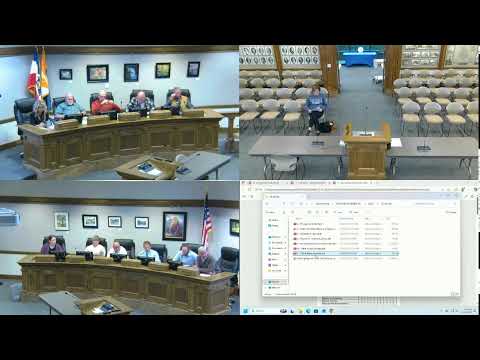
The Cedar City Planning Commission held a public hearing on the 90% draft Water Use and Preservation Element of the General Plan and heard a technical presentation from Ridley Griggs of HAL Engineering outlining the state requirement and the plan’s key findings. Griggs said the element is required by recent state legislation and that the draft maps current use, compares city performance to state conservation goals, and identifies strategies for securing future reliable supply.
Griggs told commissioners the plan reports historic per‑capita water use (gallons per capita per day) and shows Cedar City has met the broader regional conservation goal and has hovered near a stricter subregional goal over the last decade. He said the city’s current systems use roughly 7,000 acre‑feet per year, while long‑term demand could approach nearly 14,000 acre‑feet by mid‑century. After accounting for water‑rights reductions under the local groundwater management plan, Griggs said the city’s reliable existing supply is roughly 6,000–6,200 acre‑feet per year, creating a long‑term supply gap that the plan must address.
The plan groups possible actions and ranks them by cost, ease of implementation and likely effectiveness. Near‑term recommendations include consolidated public education (a centralized website and materials), pilot programs and a small water‑conservation committee to evaluate higher‑impact options. Griggs highlighted planned smart meters that will allow customers to log usage in near real time and recommended presenting comparison tools on bills to encourage conservation. He also noted an in‑progress wastewater effluent reuse study and described later phases (pump station, pipeline, irrigation expansion) that could increase secondary water availability.
Public commenters urged the commission to weigh equity and behavior modification approaches. Anne Clark said tiered water pricing amounts to a “punishment tax” that could disproportionately burden larger or lower‑income households and urged either a single price or per‑person accounting. Corine Severn suggested limiting turf to either the front or back yard on new lots, providing conservation materials at account sign‑up, and restoring a local demonstration garden. Dr. Sean Severn, an environmental scientist, recommended behavior‑based incentives, city demonstration projects, infiltration galleries to recharge aquifers and practical graywater/infiltration approaches tailored to local conditions; he offered to serve on a committee.
Staff and consultants said several code or ordinance options are being considered—landscape plan requirements tied to conservation billing tiers, targeted ordinance revisions to restrict ponds or nonessential turf, and potential matching funds for turf buy‑back programs in partnership with Central Iron County Water Conservancy District. Commissioners and staff also noted legal limits on municipal authority (for example, the city may require but not necessarily delay permits solely for landscape plan submission under state law) and the need for further refinement before final adoption.
The commission did not take a final formal vote on the plan at the hearing. Staff said the item will return to the commission for a final recommendation on the Nov. 18 agenda after incorporating feedback from this meeting and follow‑up studies (including the effluent reuse analysis).