Get Full Government Meeting Transcripts, Videos, & Alerts Forever!
Get email alerts on the State Legislation topic
No spam. Unsubscribe anytime.
City lobbyists brief Cottonwood Heights council on 2025 legislative threats and opportunities
Summary
Local lobbyists told the Cottonwood Heights City Council the 2025 Utah Legislature will focus on affordable housing, election integrity, and budgetary tax‑cut proposals that could constrain municipal land‑use authority; they urged the city to prioritize infrastructure and track bills that may create new mandates for local services.
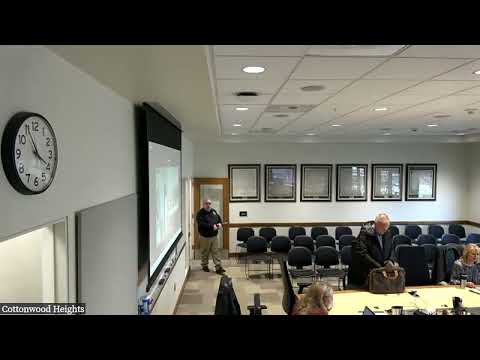
Mayor Mike Quickers convened the Cottonwood Heights City Council work session and introduced lobbyists Greg Curtis and Brian Allen, who outlined early priorities and risks at the 2025 Utah legislative session.
Greg Curtis said reduced federal COVID relief funding means a tighter state fiscal environment and warned that some legislators are likely to pursue policies that limit municipal land‑use authority as a way to address housing shortages. “They’re thinking the way to resolve that is going after municipal land use,” Curtis said, urging the council to monitor proposals that could reduce local control.
Brian Allen emphasized the Legislature’s renewed emphasis on affordable housing measures, including proposals to increase density and expand accessory dwelling unit (ADU) allowances. He noted bills under consideration would require cities to allow certain ADUs and permit higher density in areas previously zoned for lower density. Allen also described a proposal that would give local residents a first right of refusal on homes before out‑of‑state investors could purchase them.
Council members pressed the lobbyists on several specific items: whether the transportation utility fee litigation (previously advanced but not passed) will return as a restriction on cities, how proposals on signature verification and mail‑ballot handling might affect local elections, and whether short‑term rental regulation is likely to move forward. Curtis and Allen said they are tracking a broad set of bills — from election integrity measures to proposals tied to border and resource‑development enforcement — and advised the council to coordinate with the League of Cities and Towns.
The lobbyists and council flagged two points for ongoing staff work: (1) identify the city’s top infrastructure priorities that could be advanced for funding, and (2) monitor bills that risk imposing unfunded mandates (including provisions related to undocumented immigrants and law enforcement requirements). Curtis offered to follow up on specific infrastructure concerns raised by the council.
The discussion closed with the council thanking the lobbyists and asking staff to keep members updated during the session.