Get Full Government Meeting Transcripts, Videos, & Alerts Forever!
Get email alerts on the Water Resources topic
No spam. Unsubscribe anytime.
Cedar City staff outline effluent‑reuse study, council leans toward partial expansion over citywide system
Summary
City engineers briefed the council on a budgeted study of Type 1 effluent reuse, showing roughly 3,400 acre‑feet of effluent is available (city’s portion) and potential expansion of the partial secondary irrigation system from ~200 acres (800 AF) to ~330 acres (1,300 AF); council signaled preference for a backbone/partial expansion rather than a full citywide secondary system pending cost and winter-storage analysis.
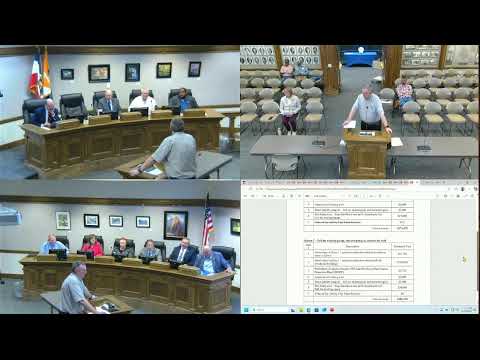
Jonathan Stout of the City Engineering Department presented a budgeted study to evaluate using Type 1 wastewater effluent for irrigation and other non‑culinary uses. Stout said new treatment-plant upgrades are producing higher-quality effluent but additional infrastructure (pump stations, pipelines, storage) would be required to distribute it. Staff identified roughly 3,400 acre‑feet of effluent available overall (the city’s proportional share after allocations); combined with the Cemetery and Northfield wells, staff estimated around 4,600 acre‑feet could be available.
Current city secondary irrigation serves just under 200 acres and used approximately 800 acre‑feet last year; expanding the partial system backbone could serve about 330 acres using about 1,300 acre‑feet. Council discussed options: a partial/backbone system targeting large outdoor users (parks, schools, churches, golf course) versus a full citywide secondary system that might undermine residential conservation incentives and carry higher maintenance obligations. Staff and several council members cautioned a full citywide system could erode conservation gains from residential tiered rates and would require much higher capital and maintenance costs.
Other issues the study will examine include winter storage or recharge options (where to put excess in winter), regulatory treatment needs (phosphorus removal required for recreational lakes), and potential industrial customers (data centers or cooling facilities at Port 15) that might justify trunk-line investment. Council members asked for cost estimates and options in the final study and signaled preference to pursue a partial expansion approach as a near-term priority.
Next steps: staff will proceed with the study focused initially on a partial‑system backbone and provide cost estimates, winter-storage options, and treatment-requirements analysis for council review.