Get Full Government Meeting Transcripts, Videos, & Alerts Forever!
Get email alerts on the Municipal Budgeting topic
No spam. Unsubscribe anytime.
Draper leaders outline budget basics, inflation pressures and next week’s tentative budget
Summary
Mayor Troy Walker and Finance Director John Vike explained how Draper’s budget is funded—roughly 40% from property tax and 40% from sales tax—warned that inflation has driven up vehicle and construction costs, and said the tentative 2026 budget will be considered by the council next week.
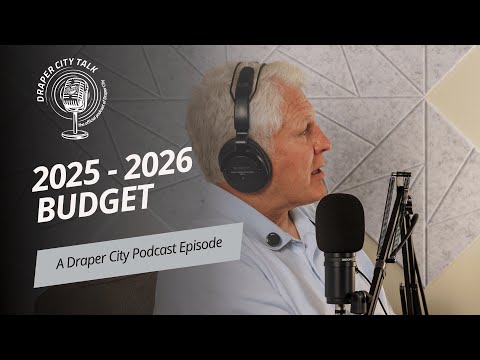
Mayor Troy Walker and Draper City Finance Director John Vike used the Draper City Talk podcast to walk residents through how the city’s budget is built, how recent inflation has raised the cost of vehicles and infrastructure, and what choices the city faces as it prepares the tentative 2026 budget, which will be considered by the council next week.
Walker opened the episode by urging listeners to check their Salt Lake County property tax bills to see how many taxing entities receive portions of the total bill, then asked Vike to explain the city’s fiscal mechanics. ‘‘Our obligation legally is to balance our budget every single year,’’ Walker said, explaining the fundamental constraint on municipal finance. Vike added: ‘‘The city gets revenue from a few different sources. The two main sources of revenue would be property tax, and then second would be sales tax.’’
Vike said property tax provides about 40% of Draper’s total budget and sales tax is ‘‘probably close to another 40%,’’ with the remainder coming from fees, permits and occasional grants. He and Walker repeatedly emphasized that assessed-value increases on individual homes do not automatically increase the dollar amount a taxing entity receives; the county computes assessed values and taxing authorities set the dollars they need, then rates are calibrated so each entity receives its required revenue (plus growth where applicable).
Using everyday examples, the pair described how sales tax is divided among jurisdictions. Vike noted that a 7% purchase tax yields slices for multiple entities and that ‘‘about 1% of that goes to the cities and the county’’ with Draper keeping a larger share for purchases made inside city limits.
Both officials stressed that bringing more retail and commercial activity into Draper is one way to relieve pressure on property taxes. ‘‘If you can buy it at home, you’re just helping your own community,’’ Walker said, urging local purchases and economic development.
They devoted time to how inflation affects capital planning. Walker told listeners a ladder fire truck that once cost about $800,000 now carries a price around $1.8 million and has a lead time of roughly four years; Vike said that rising vehicle and construction costs complicate multi‑year fleet and capital replacement planning. On police vehicles, Vike said a fully equipped patrol car now costs about $80,000 and the city aims for a six‑year service life, up from roughly $40–60k in earlier years.
Workforce and recent policy choices were also discussed. Vike said Draper has roughly 360 full‑time equivalent employees and that last year’s modest tax increase was used in part to increase pay and add positions for firefighters and police officers. On balancing future demands, Vike said the city faces ‘‘inflationary increases’’ with relatively static revenue and therefore must weigh options such as reducing service levels, seeking new revenue by attracting businesses, or other efficiency measures.
Vike described the finance department staffing (12 people, including four accountants) and told listeners the city’s tentative budget for fiscal 2026 will be considered by the council next week. He encouraged residents to review the budget online and submit comments. ‘‘It’s available online right now,’’ Vike said, inviting public input.
The podcast closed with a reminder to subscribe for Draper City notifications and to attend council meetings or review materials online for more detail.