Get Full Government Meeting Transcripts, Videos, & Alerts Forever!
Get email alerts on the Ethics Training topic
No spam. Unsubscribe anytime.
Planning commissioners receive ethics, conflicts and open-meetings briefing
Summary
City staff led required ethics training at the May 20, 2025 Planning Commission meeting, reviewing conflict-of-interest disclosure rules (including a 10% substantial-interest threshold), gift limits, and the Utah Open and Public Meetings Act.
At the May 20, 2025 Cedar City Planning Commission meeting, city staff delivered the commission’s annual ethics and open-meetings training, emphasizing transparency and the legal duties of appointed members.
The trainer opened by stating the principle behind the guidance: "The whole goal in any of this ... is to make sure that what is done by the government is done in the light of day." Staff reminded commissioners they are treated as appointed officers for purposes of the rules and described categories of conflicts and required disclosures.
A key point in the briefing was the municipal code’s "substantial interest" threshold: staff explained that, for this code, ownership of 10% or more of an entity is treated as a substantial interest that must be disclosed. The presenter also reviewed safe-harbor and gift rules (occasional nonpecuniary gifts under $50 and guidance on repetitive small gifts), penalties for serious violations, and best practices for avoiding both legal and political conflicts (for example, stepping out of a room where an item is discussed or disclosing relationships even when the law may not require recusal).
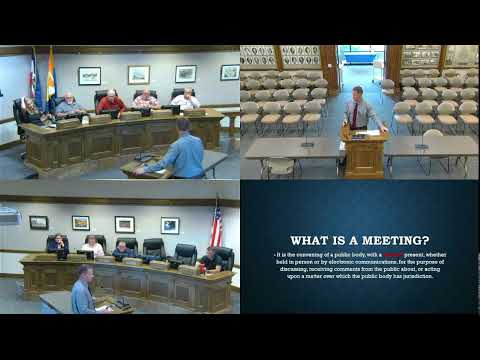
Staff summarized the Utah Open and Public Meetings Act, explaining that a quorum discussing city business constitutes a public meeting that must be noticed and open to the public. They cautioned that closed sessions are rare and should be used only where statute allows (property negotiations and security matters were given as examples), and urged commissioners to consult counsel before attempting to close a meeting.
The session concluded with an invitation to complete disclosure forms and a reminder that staff is available for follow-up questions.