Get Full Government Meeting Transcripts, Videos, & Alerts Forever!
Get email alerts on the Watershed Protection topic
No spam. Unsubscribe anytime.
Commission explores expanding Watershed Source Protection Overlay to include sole-source aquifers, plans subcommittee
Summary
Commissioners discussed adding EPA-designated sole-source aquifer recharge areas to the Watershed Source Protection Overlay, flagged potential unintended consequences for private development, and agreed to put a subcommittee formation on a future agenda to draft redlines for staff and legal review.
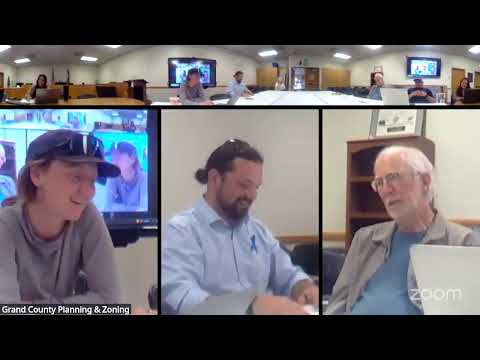
Commissioners spent the bulk of the March 24 meeting discussing proposed changes to the Watershed Source Protection Overlay (WSPO) that would explicitly cover EPA-designated sole-source aquifer recharge areas, including Castle Valley and the Glen Canyon formation.
Commissioner Obi introduced the proposal and said the WSPO currently does not explicitly protect the two sole-source aquifers serving the Moab and Spanish Valley area. "We have it's an EPA's sole source aquifer," Obi said, describing how an EPA designation creates a federal nexus that can trigger additional review when federal funds or federal agencies are involved.
Commissioners and staff discussed examples from Forest Service planning and noted the overlap and differences between federal and state watershed delineations. The Total Maximum Daily Load (TMDL) status of local streams, including E. coli impairments on some water bodies, was raised as context for strengthened protections and for seeking grant funding to address water quality issues.
Several commissioners urged broad protection of groundwater and recommended including both EPA and county-approved recharge areas in the WSPO language. One proposed text change would read to reference "areas designated by the US EPA sole source aquifer, areas approved by the county," making the overlay explicitly applicable to the EPA-designated recharge areas as well as county-approved areas.
At the same time, commissioners raised questions about unintended consequences for private development (for example, stormwater requirements and road standards) and practical effects on agricultural uses; one commissioner noted livestock limits as a potential source of pushback. Staff clarified the WSPO changes would apply only to private, unincorporated lands and that some requirements (such as stormwater protection plans) are already mandated by state law.
The commission broadly supported forming a subcommittee or working group to redline the overlay language, involve staff and legal review, and later engage regional partners and possibly consultants. The proposed process: create an internal subcommittee to draft redlines, route drafts to an interdisciplinary team (including county departments and legal), and then forward a refined proposal to the County Commission for public hearings and final consideration.
Commissioners identified potential external stakeholders to involve in the drafting process, including regional watershed partners and state water quality representatives. Chair and staff agreed to add an agenda request to a future meeting to consider formally creating a subcommittee and to provide guidance on timeline and staffing needs.