Get Full Government Meeting Transcripts, Videos, & Alerts Forever!
Get email alerts on the Wildland Mitigation topic
No spam. Unsubscribe anytime.
Draper fuels crew outlines mitigation work: 30-foot defensible-space recommendation and free homeowner assessments
Summary
Parker Hansen explained Draper’s fuels-crew operations — five seasonal crew members (May–October) who thin vegetation, use mulchers where accessible, stack and cure cut piles for winter burns, and offer free homeowner assessments recommending a minimum 30-foot defensible space.
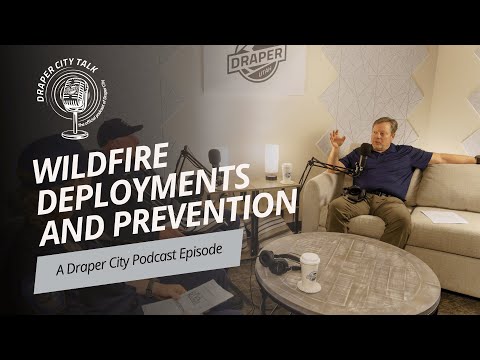
On Draper City Talk, fuels-crew supervisor Parker Hansen detailed the department’s local mitigation program and practical steps residents can take to reduce wildfire risk.
Hansen said Draper employs a seasonal fuels crew from roughly May through October; this past year the crew had five members who perform chainsaw work, pruning and thinning in foothill areas and other wildland-urban interface locations. "We have a fuels crew that goes out and does the work. This last year we had 5 crew members," Hansen said.
Hansen described defensible space: "The recommendation is a clearing of 30 feet from your home," meaning 30 feet of reduced vegetation between the edge of brush and any structure, including sheds. He added that pruning tree branches 6 to 10 feet above the ground and increasing crown spacing are additional steps property owners can take to reduce the chance of fire spreading from vegetation to buildings.
When equipment access is feasible, the department uses a skid steer with a mulching head to convert vegetation into chips; in steeper, inaccessible areas crews cut and stack brush piles to cure for a year or two and then burn those piles in winter when conditions allow. Hansen explained these practices are strategic: mulching reduces fuel continuity where machinery can operate, while cured pile burning is used where access is limited.
Hansen and Captain Garn said Draper offers free homeowner assessments. "We get a lot of requests... we’ll go out there or one of the on-duty crews will go out, speak with the homeowners, provide a homeowner assessment, and give those recommendations," Hansen said. The department posts guidance and contact information at DraperUtah.gov/fire.
Walker closed by urging residents to follow defensible-space guidance and to avoid fireworks in ban zones that can ignite fires in the wildland interface.
Residents can request an assessment through Draper City Fire or find resources at DraperUtah.gov/fire.