Get Full Government Meeting Transcripts, Videos, & Alerts Forever!
Get email alerts on the Wildfire Response topic
No spam. Unsubscribe anytime.
Draper firefighters describe rapid EMAC deployment, 40-hour shifts and neighborhood protection during Los Angeles fires
Summary
Draper City Fire Captain Brian Garn and fuels supervisor Parker Hansen described an Emergency Mutual Aid Compact (EMAC) deployment to Los Angeles-area wildfires, where Draper crews joined multi-agency task forces, worked extended shifts, performed structure protection and later returned for home assessments and mop-up.
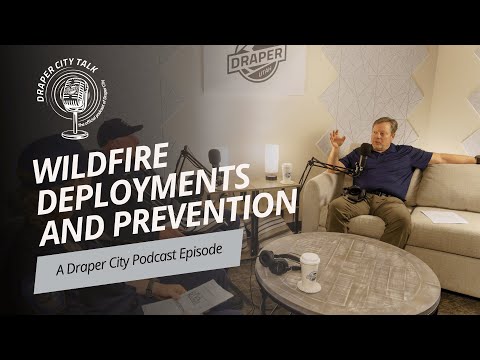
Mayor Troy Walker interviewed Captain Brian Garn of the Draper City Fire Department and fuels-crew supervisor Parker Hansen about Draper's recent deployment to wildfires in the Los Angeles area.
Garn said the deployment was coordinated through an Emergency Mutual Aid Compact (EMAC) that lets states request specific trained personnel and equipment. "It's a quick process," Garn said, explaining the state emergency management office matches requests with available resources and covers deployment costs.
Parker Hansen described arriving amid large-scale operations and long work cycles. "We worked a 40 hour shift through the night," Hansen said, describing initial check-in delays because so many resources were responding. He said Utah task forces were part of a larger grouping and that Utah sent roughly 17 engines to the incident.
On arrival, Draper crews staged near neighborhoods such as Brentwood to provide structure protection and prepare hose lines and equipment. Garn said crews assessed vegetation around homes and stood ready to defend properties if the fire crossed ridgelines. "We were structure protection," he said, noting crews often waited for a shift in wind and for air resources to slow fire progression.
Both firefighters emphasized the scale of aerial support. Hansen called it "the most amount of aircraft flying at one time" he had seen, with helicopters and air tankers conducting retardant and water drops that helped keep fire activity from immediately overrunning neighborhoods.
The Draper crews were not always on the initial, most intense fire line; by the time they arrived many of the most destructive burn patterns had already occurred. Hansen said a large share of structure loss happened in the first 24 to 48 hours. Draper personnel focused on catching unburned edges, extinguishing hot spots and performing mop-up so frontline suppression teams could continue active operations.
After active suppression, crews returned to perform home assessments, check for smoldering embers and assist residents re-entering properties with temporary repairs such as tarps. Garn said that kind of supportive work was necessary when residents were allowed back into affected neighborhoods.
Walker closed the segment by thanking the firefighters for their service and reiterating a local public-safety appeal: avoid fireworks in ban zones, which he said have been the leading cause of recent wildland-interface fires during his time in office.
The Draper City Fire Department posts resources and contact information for homeowners seeking assessments at DraperUtah.gov/fire.