Get Full Government Meeting Transcripts, Videos, & Alerts Forever!
Get email alerts on the Municipal Finance topic
No spam. Unsubscribe anytime.
Allentown finance director reports revenues ahead of budget; public-safety spending exceeds targets
Summary
Finance director Miss Patel told the Budget & Finance Committee that December monthly and quarterly reports show general fund revenues about 4% above budget while police, fire and EMS spending exceeded budgeted levels; the city’s cash balance and investment returns were also summarized.
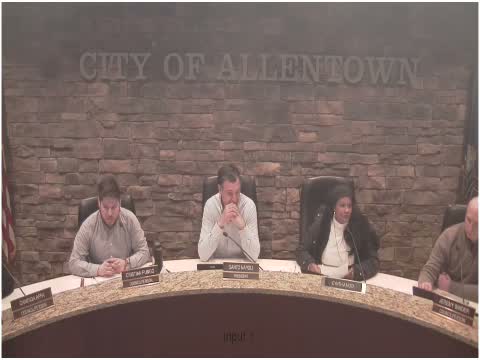
Miss Patel, the city finance director, told the Allentown Budget & Finance Committee on Jan. 23 that the city’s December monthly and quarterly reports show revenues running stronger than planned and a cash balance providing operating flexibility.
The finance director said the city’s general ("journal") fund was budgeted at about $146 million and came in roughly 4% higher, at about $152 million, driven by stronger earned-income tax receipts, business-privilege taxes, permit and license receipts, EMS transit fees and better-than-expected investment income. She said about 70% of general-fund revenues come from taxes; the transcript lists city real-estate tax at $38.6 million, earned-income tax at $45 million, business privilege tax at $12.7 million and transfer tax at $2.4 million, with roughly 14% from intergovernmental sources including grants and state aid.
On expenditures, Miss Patel said the general fund was about 96% spent year to date, with personnel costs accounting for roughly 73% of expenditures and nonpersonnel lines showing about 4% in realized savings. By public-safety line item she reported police spending at about 118% of budget, fire at about 122%, and EMS at about 143%, and noted those overages reflect the unpredictability of emergency-response costs.
Miss Patel also reviewed other funds: the risk fund was reported at about 103% of budgeted expenditures after an intrayear transfer; the solid-waste fund’s fee increases (effective in July) produced year-to-date revenues at roughly 101% (about $23.9 million) and expenditures at about $22.1 million; stormwater and the golf fund were reported as performing at or above budget. She said the new 2025 building-code fund has produced higher-than-projected revenues (reported at about $4.2 million) and is showing expenditures at about 88% of budget.
On investments, Miss Patel said the general fund cash balance was about $40.3 million and that investment income for the year totaled approximately $3.2 million. She named a Pennsylvania local government investment trust (transcribed as "Plagate") and Prime and term investments, and noted operating cash in TD Bank of roughly $3.1 million at an indicated ~3% APY.
On capital spending, Miss Patel said fourth-quarter capital expenditures were about $2.4 million and that an additional $7.8 million is encumbered for future years. The transcript shows a year-to-date capital-expenditure figure recorded as $1,212,700,000; that figure appears inconsistent with the committee’s other line items and will require confirmation from the administration.
Committee members asked for follow-up data on the building-code fund split between commercial and residential permits and for clarification of timing in solid-waste vendor payments. Miss Patel said departments and CED staff will provide those breakouts and that December reports will be updated in two further iterations as vendor payments are processed.
The controller, Mr. Glaser, told the committee he supports the review of the budget process. The meeting closed after Miss Patel listed administrative priorities including a planned July go-live for a new HR/payroll module, efforts to manage rising health-care costs and preparation for a general-obligation bond issue.
The committee did not take a formal vote during the meeting; members asked for more data and committed to follow-up briefings and department-level updates.