Get Full Government Meeting Transcripts, Videos, & Alerts Forever!
Get email alerts on the Stormwater topic
No spam. Unsubscribe anytime.
County holds NPDES Phase 2 stormwater training for Hancock County staff
Summary
Hancock County staff received a stormwater management training on NPDES Phase 2 requirements, MS4 obligations and eight recommended green-infrastructure practices; presenter Lisa Morrison urged inspections, maintenance and public outreach to reduce runoff and pollution.
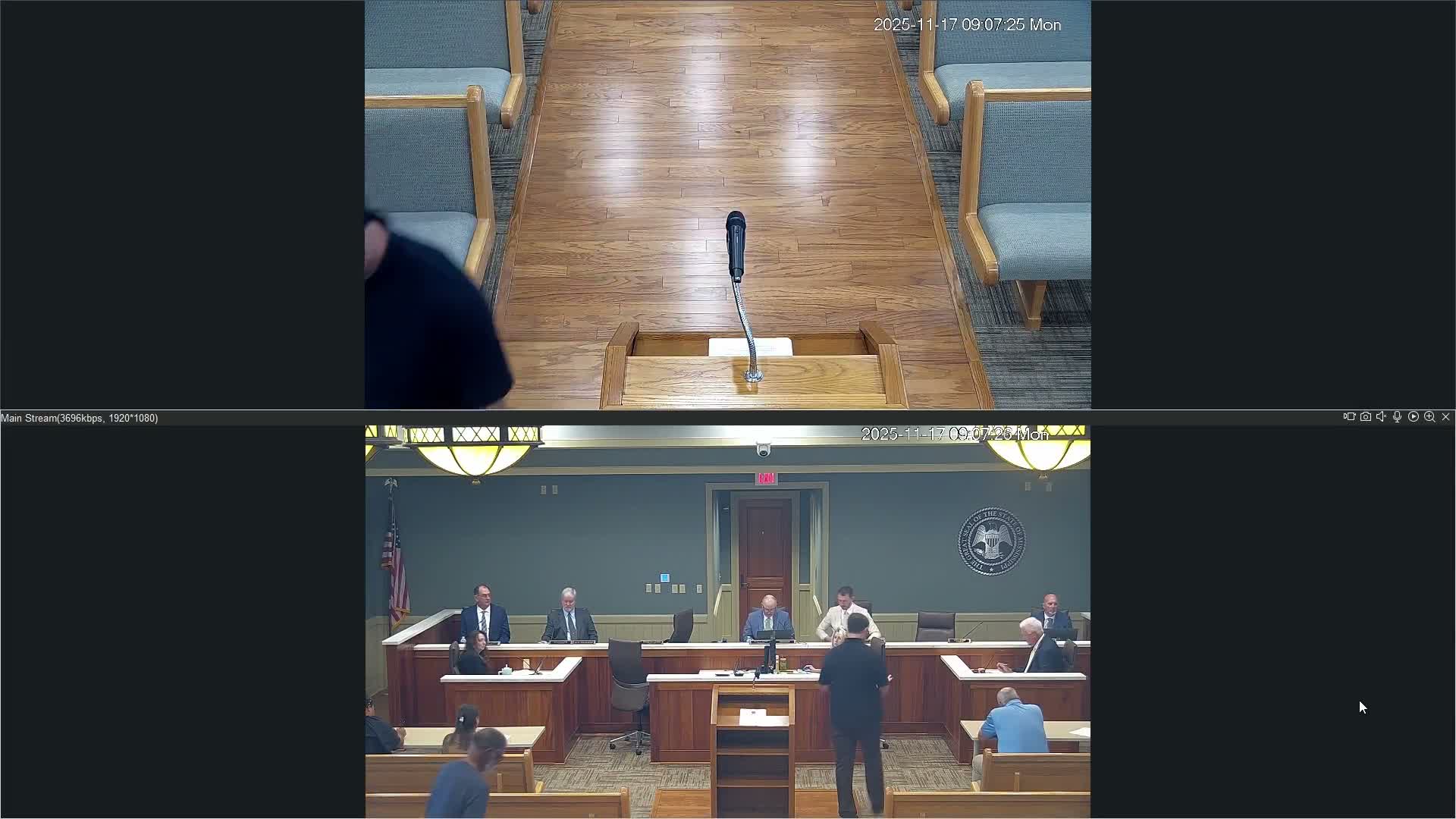
Hancock County employees and supervisors attended a stormwater "growth readiness" training on Nov. 17 that reviewed National Pollutant Discharge Elimination System (NPDES) Phase 2 obligations and local steps to reduce polluted runoff.
"This is the Hancock County NPDES Phase 2 stormwater management plan growth readiness training," said Lisa Morrison, who presented with consultant Neil Schaffer. Morrison traced the program to the federal Clean Water Act and explained that Hancock County qualifies as an MS4 — a municipal separate storm sewer system — which triggers six minimum control measures the county must implement to remain in compliance with its DEQ permit.
Morrison outlined the measures the permit requires: public education and outreach; public involvement; illicit-discharge detection and elimination; construction site runoff controls; post-construction stormwater management for permanent best-management practices; and pollution prevention/good-housekeeping for county facilities. She said the county performs semi-annual inspections to detect unpermitted discharges and to verify installation and maintenance of silt fences and other controls at construction sites.
She described EPA-recommended "smart stormwater" approaches and green infrastructure options, including permeable pavement, bioretention areas, green roofs and rain gardens, and said the county will provide staff Swift training and other municipal staff training in the near term. Morrison added that program funding options include general funds, utility fees, state and federal grants, nonprofit contributions and private investment.
Morrison stressed the practical effects of good stormwater management: "If we don't manage stormwater, you'll see an increase in flooding, which results in infrastructure and property damage, polluted waterways, erosion, and permit noncompliance." She noted an example statistic for context: a two-inch rainfall can produce more than 54,000 gallons per acre of runoff on undeveloped land that a forest would otherwise retain.
The training materials also flagged the county's obligations to secure permanent maintenance agreements for private stormwater features where applicable, and to document inspections and corrective actions. The board did not take formal action on the presentation; staff said they will schedule employee Swift training and continue outreach tied to the county's MS4 permit cycle.