Get Full Government Meeting Transcripts, Videos, & Alerts Forever!
Get email alerts on the Public Health Sewage topic
No spam. Unsubscribe anytime.
Resident tells Hancock County supervisors raw sewage is running into ditches on Capilama Road; board says it will contact health officials
Summary
A Hancock County resident told the board during public comment that raw sewage is flowing into roadside ditches near Capilama Road, contaminating wells and creating a health hazard. The board said staff would call the state health office and follow up; the county noted limits on its enforcement authority.
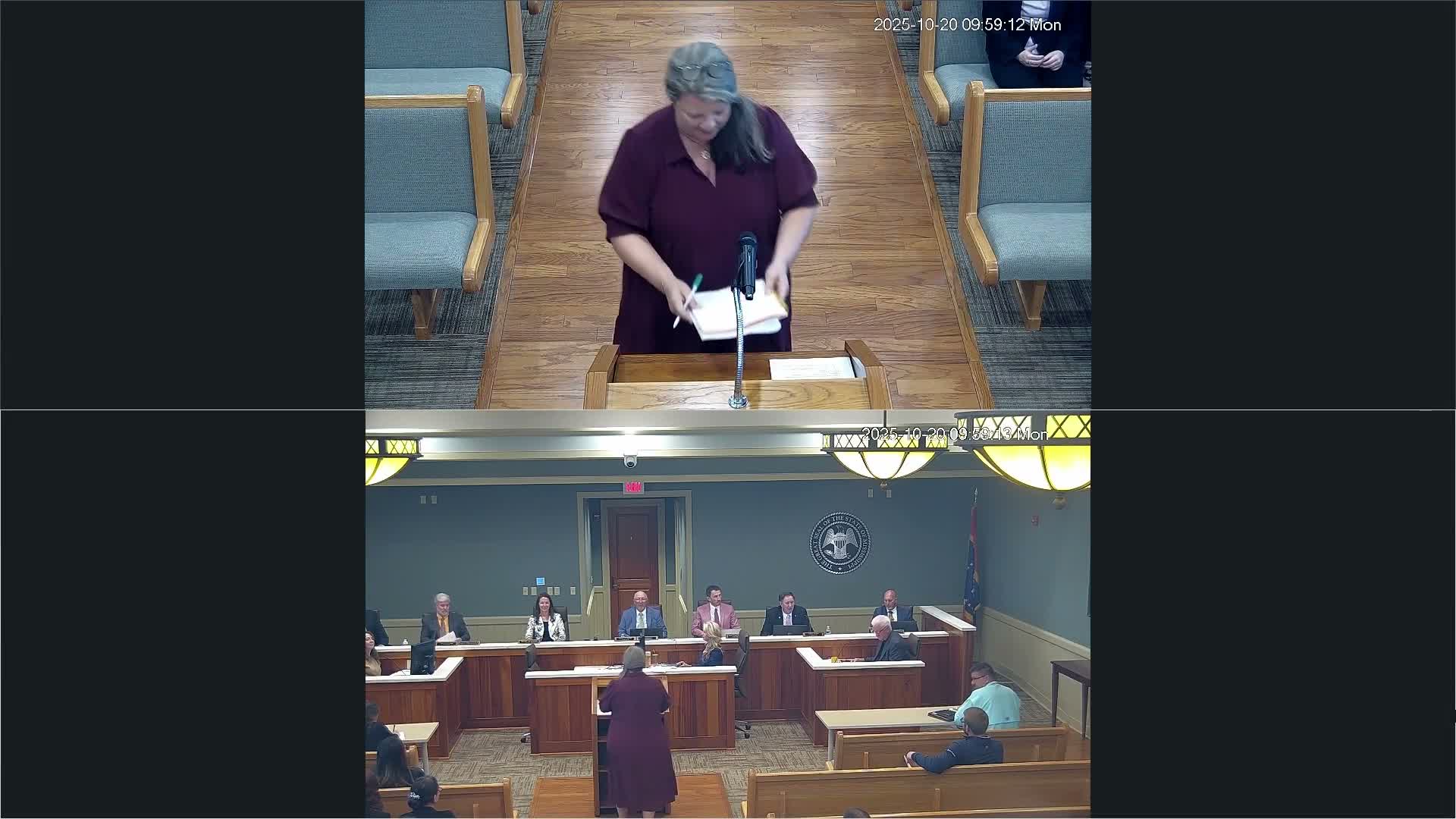
Kelly Fall, a Hancock County resident, told the Board of Supervisors during public comment on Oct. 20 that raw sewage has been running down Capilama Road into ditches next to her property and the nearby volleyball facility, creating what she described as a public-health hazard for children and animals.
"I have sanitary napkins in my ditches on my driveway," Fall said during her remarks, urging the board to call the Mississippi Department of Health and to “put some boots on the ground” to see the problem. She said she has photographs and water wells on the affected properties and asked the board for immediate assistance.
Board members agreed to attempt a county-initiated call to the Department of Health. County staff said they would make the request and explained that, while the county could report and ask the state to inspect, the county cannot compel a state agency to act. A county official offered to take a contact name from Fall to avoid repeating prior calls.
The board and staff discussed possible origins of the flow, including recent clearing and grading near the development adjacent to the volleyball facility. A staff speaker (speaker 14) also provided an ordinance adoption date for a referenced local ordinance: Jan. 7, 1997. Several supervisors said they would coordinate with county staff to document the complaint and request a state inspection.
The board did not take formal enforcement action at the meeting. Next steps recorded on the record: staff will contact the Department of Health, collect any evidence Fall provides, and schedule an on‑site review to determine whether county permitting or a state public-health response is required.