Get Full Government Meeting Transcripts, Videos, & Alerts Forever!
Get email alerts on the Transportation topic
No spam. Unsubscribe anytime.
Planning director pitches Safe Streets action plan, corridor studies and UDO updates; council presses for funding
Summary
Planning & Transportation Director David Hittle presented Safe Streets for All goals, corridor studies, and proposed UDO work to support housing, but several council members warned the budget lacks funding to implement the city’s transportation priorities.
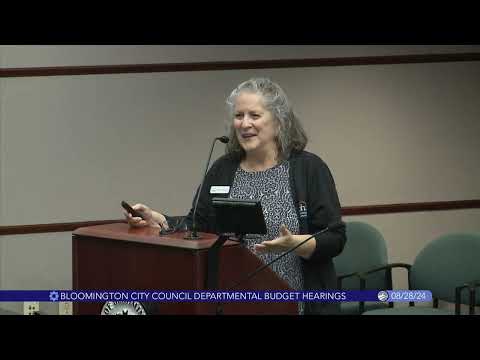
David Hittle, director of the Department of Planning and Transportation, framed his presentation around three goals: optimize permitting and internal processes, implement the Safe Streets for All action plan and adapt the Unified Development Ordinance to the city’s changing housing needs.
Hittle highlighted major planning work, including finalizing the Summit planned unit development and outlining corridor and linkage studies tied to implementation of safety and mobility projects. He cited crash figures from 2018 to 2022 — 13,626 crashes with 756 serious injuries and 14 fatalities — and said the SS4A action plan aims to reduce those numbers and open eligibility for federal implementation funding. Hittle said corridor studies typically cost in the low hundreds of thousands but that SS4A implementation projects can be matched by federal dollars (for example, corridor studies with an 80% federal match), while noting local design and match funds are necessary.
Council members pressed Hittle on where construction or design money for transportation projects appears in the administration’s 2025 budget. Multiple members — including those who raised the city’s unanimously adopted transportation priorities — said funding for the Transportation Plan, sidewalks and several corridor studies was absent or limited in the proposal. Hittle replied that some items are funded through other departments (engineering), that the SS4A action plan must be completed to apply for federal implementation funds and that the department will seek grants and matches. He estimated the remaining unfunded portion of the priority network could be in the tens of millions and recommended a multi‑year financing strategy.
Public commenters and council members urged accelerating small, inexpensive pilot safety projects (paint, bollards, temporary traffic calming) and warned that without local match and capital the city will not realize the potential of the SS4A action plan. The discussion closed with council members calling for clearer multi‑year capital planning and for staff to return with more specific cost and funding options during the budget process.
Hittle said the Safe Streets action plan will be adopted before the end of the year and that at least one corridor study (Atwater/East 3rd) is next in line for more detailed work and potential federal match opportunities.