Get Full Government Meeting Transcripts, Videos, & Alerts Forever!
Get email alerts on the Wastewater Rates topic
No spam. Unsubscribe anytime.
Livermore council adopts five‑year wastewater rate plan after public hearing
Summary
After a public hearing and 43 written protests, the Livermore City Council unanimously adopted a five‑year wastewater cost‑of‑service study that sets proposed rate increases of about 4% per year (about $3 per month for a single‑family residential customer), effective July 1.
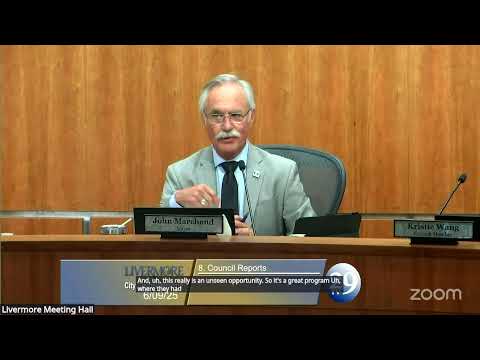
The Livermore City Council on June 9 unanimously adopted a five‑year wastewater cost‑of‑service study and approved rate increases staff said are needed to fund capital improvements and maintain reserves.
Acting Assistant Public Works Director Anthony Smith told the council the city expects roughly $54 million in wastewater capital needs over the next five years and recommends approximately 4% annual rate increases — about $3 per month for a typical single‑family residential customer — to fund operations, maintenance and future projects. "The proposed rates tonight would be increasing by approximately 4% each year," Smith said.
The proposal includes building reserve targets (roughly $9 million each for operations and capital) and beginning to plan for a larger nutrient‑permit compliance project estimated at about $30 million in years six through ten. Smith said Proposition 218 limits how property‑related fees are set, and the city also used the objection process created by AB 2257.
Resident Jerry Artsingstall made a written protest and urged caution, saying the city’s online master plan still showed 2017 documents and that his parcel calculations showed a larger overall increase. "I see 29% increase, not 4%," Artsingstall told the council. City staff responded that the rate study and updated council packet show the multi‑year 4% increase and that the objection deadline under AB 2257 closed May 12.
The city clerk reported the clerk’s office received 43 written protests and 14 objections filed under the objection process; the clerk said the threshold for a majority protest would have been 14,169 parcels and that a majority protest does not exist. Based on that tabulation, Council Member Dunbar moved to approve staff’s recommendation and Council Member Wong seconded. The motion passed unanimously. The new rates are scheduled to take effect July 1, subject to the administrative requirements of Proposition 218 and the city’s notification process.
What happens next: staff will implement the rate changes on the schedule in the adopted study and continue to respond in writing to objections filed under the AB 2257 process, as required.