Get Full Government Meeting Transcripts, Videos, & Alerts Forever!
Get email alerts on the Encampment Ordinance topic
No spam. Unsubscribe anytime.
Allentown committee hears expert testimony and concerns on proposed encampment ordinance
Summary
Councilors reviewed a draft ordinance to create SOPs for public‑property encampment responses, heard expert testimony favoring harm‑reduction approaches, raised concerns about an "immediate hazard" exception and county coordination, and noted a March 5 county/city workshop for further work.
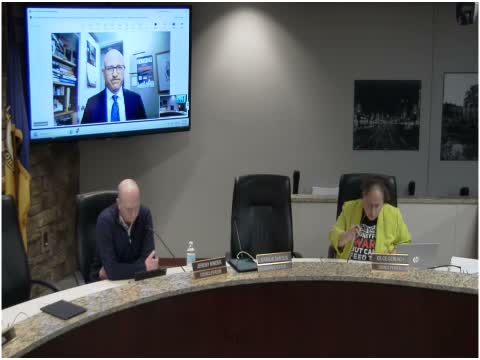
Councilor Gerlach presented a draft ordinance intended to standardize how Allentown responds to encampments on public property and reduce the harm caused by abrupt clearances. The committee heard testimony from Eric Tarras, senior policy director at the National Homelessness Law Center, who urged a proactive, outreach‑focused approach and urged the council to adopt the ordinance as a first step.
Tarras said the measure, modeled on a Kitsap County approach, would require sanitation and outreach and “set Allentown up for a win‑win situation where both housed and unhoused residents come out ahead.” He warned against relocating people without providing housing or shelter options, saying, “No one is choosing to live in encampments.”
Committee members pressed for clarity on a number of operational points. Council President Napoli and others asked whether the administration had an existing standard operating procedure; Councilor Gerlach said no formal SOP had been provided. Members discussed naming Lehigh County as a partner rather than the lead and expressed concern about duplicating services.
Multiple speakers raised concerns about the ordinance’s “immediate hazard” language. Christina, co‑chair of the Commission on Homelessness (first name given in the record), said she feared the term could be invoked too broadly and allow removals with only 72 hours’ notice, causing harmful displacement. A DCED representative told the committee that DCED’s role is coordination—collecting data and mobilizing partner agencies—but that removal decisions rest with departments such as police, fire and law.
Street outreach manager Riley of the Conference of Churches described the effects of a recent sweep as traumatic for residents and for providers, saying communication and outcome‑tracking were lacking and many people returned to the same sites. A council member cited a calculated cleanup cost of $261,602.14 and argued those resources could have supported shelter capacity.
Speakers recommended clarifying which entities would make risk‑assessment and imminent‑hazard determinations, specifying representatives from the Commission on Homelessness rather than expecting the entire volunteer commission to lead, and building monitoring and amendment provisions so the ordinance can be revised if exceptions are misused.
The committee noted a March 5 public workshop with Lehigh County as a next step to discuss coordination. No formal vote on the ordinance occurred during the meeting; councilors said they will rework language and seek legal review before reintroducing the draft.