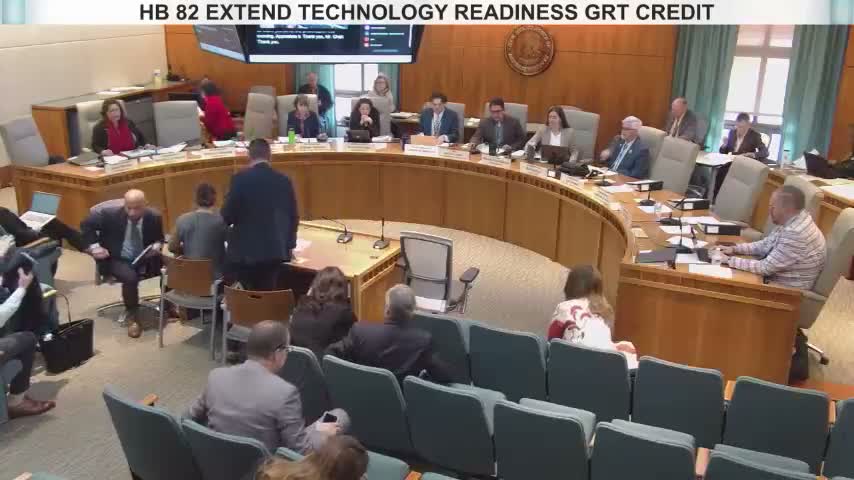
Committee tables bill to raise and expand rural health-care tax credit amid questions about caps and effectiveness
Loading...
Summary
House Bill 142, which would increase rural health-care practitioner tax-credit amounts and expand eligibility to certain underserved urban areas, drew support from health and business groups but questions about caps and effectiveness led the committee to table the bill after a motion to table was adopted.
Representative Silva presented House Bill 142 as a change to the rural health-care practitioner tax credit that would increase credit amounts and expand the definition of eligible areas to include underserved pockets in urban centers such as Albuquerque and Las Cruces while keeping higher credit levels for rural providers.
Christina Fisher of Think New Mexico and Matthew Stackpole of the Greater Albuquerque Chamber of Commerce testified in support, with Fisher noting that the credit amounts have not been increased since the program’s creation and that inclusion of emergency medical technicians addresses a major shortage. Committee members pressed for data: Representative Duncan asked how much was expended last year and was told $13,900,000; committee members asked whether a cap exists (the sponsor said there is no cap) and whether the credit effectively recruits high-salary professionals.
Representative Lundstrom and others expressed concerns about expanding eligibility to urban areas, saying pockets of poverty exist in cities but rural communities face greater distance and access barriers. Lundstrom said she ‘‘does not see urban being underserved the way rural is’’ and worried expansion without caps could divert credits away from rural areas. Representative Cadena and others asked for more evidence on effectiveness and suggested further study or tailored provisions for differing regional needs.
After discussion, a motion to table HB 142 was made and seconded and the committee indicated no opposition; the motion was adopted and HB 142 was tabled. Sponsors and members said they would continue work on definitions and metrics before any floor action.
The hearing record notes the sponsor’s statement that the rural/underserved expansion would be limited to communities determined to be underserved under federal or program definitions, and that the last-year expenditure figure presented was $13,900,000.