Get Full Government Meeting Transcripts, Videos, & Alerts Forever!
Get email alerts on the HB 38 topic
No spam. Unsubscribe anytime.
Committee adopts substitute for HB 38 to clarify prosthetics and complex-rehab coverage
Summary
The House Health and Human Services Committee adopted a committee substitute for House Bill 38, which clarifies insurer coverage rules for prosthetics, orthotics and complex rehabilitation technology, including replacement timing and restoration-of-services language. The changes were developed with OSI and insurers and will proceed toward the floor.
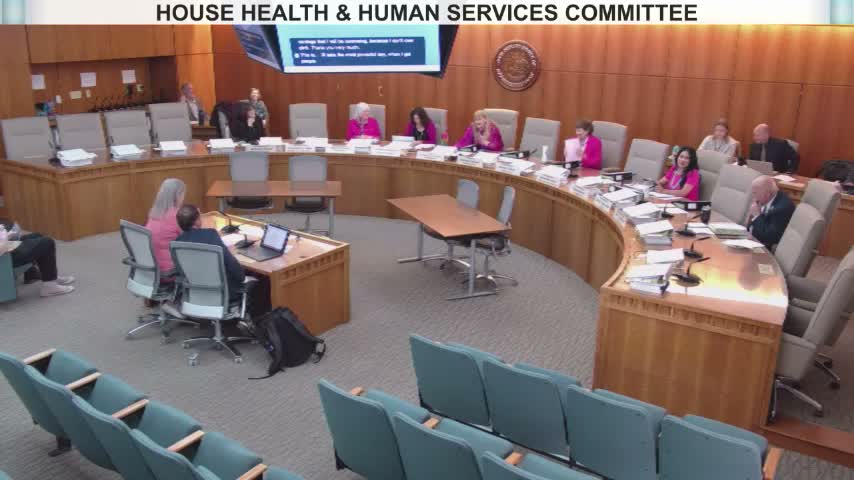
The House Health and Human Services Committee on an unspecified date adopted a committee substitute for House Bill 38, a technical rewrite designed to clarify insurance coverage for prosthetics, orthotics and complex rehabilitation technology.
The sponsor told the committee the substitute rewrites coverage language across multiple statutes so insurers and medical providers cannot misinterpret the benefit. "This bill is a simple bill that has to be written in a very complex way," the sponsor said, noting prior prosthetics legislation from this state had been used as a model elsewhere.
Kyle Stepp, the bill’s expert witness, said the changes add explicit coverage language in sections 1, 3, 4, 5 and 6 where prosthetics, orthotics and complex rehab technology had been separated; they also restore missing "restoration of services and supplies" language for complex rehab technology. Stepp said the substitute clarifies replacement timing to avoid an interpretation that an enrollee automatically receives a new device every three years regardless of clinical need, while allowing replacements when medical needs change (for example, switching a running blade to a cycling device if a patient’s activity needs change). He said the Office of the Superintendent of Insurance and Blue Cross Blue Shield reviewed and approved the proposed language.
Committee members and the chair discussed the practical need for a committee substitute because the edits occur in many places across insurance law (the sponsor said the bill was changed in 68 places) and would be too large to amend on the floor. The committee adopted the substitute by voice vote with no opposition recorded on the public record. The chair said the substitute will proceed to the floor for further consideration.
The committee’s action was procedural: adopting the committee substitute does not by itself enact the law; it clears a revised text for floor consideration. The sponsor said staff had worked with insurers and regulators to reduce the risk insurers would misinterpret the benefit, and that the goal was to ensure patients receive necessary devices while preventing unnecessary utilization.
The committee did not record a roll-call vote on the substitute in the transcript; the motion to adopt the substitute was moved and seconded and adopted after the chair announced no opposition.
Next steps: the adopted committee substitute will be sent to the House floor for further consideration and any required subsequent steps before final passage.