Get Full Government Meeting Transcripts, Videos, & Alerts Forever!
Get email alerts on the Water Supply topic
No spam. Unsubscribe anytime.
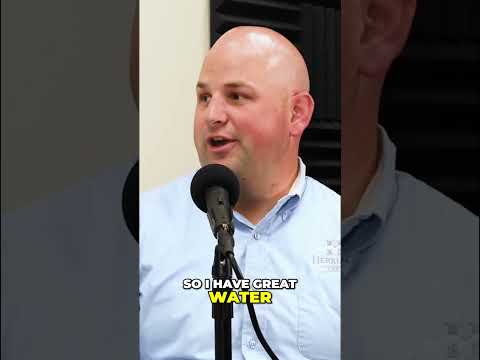
Herriman speakers explain why water hardness varies across the city
Summary
Two speakers at a Herriman event explained that water hardness differs by neighborhood because the city blends multiple sources (including Jordan Valley and Bingham Canyon Treatment Plant) and uses reverse-osmosis treatment that is then blended to prevent corrosion; residents were advised to call the city (ask for 'Will') for local guidance.
Two speakers at a Herriman event described how the city’s water supply is a blend of multiple sources and why that leads to differences in water hardness across neighborhoods.
The speakers (identified in the transcript as S1 and S2; both listed as staff members) said water drawn from one part of the city “may not really ever totally make it to the other side of the city,” and that different sources have different characteristics that affect hardness. S2 explained, “The water's always a blend of multiple sources,” and urged residents who are adjusting water softeners to “Just call the Herriman City phone number, ask for Will, or just say you have a question about hardness.”
Why it matters: Hardness affects home plumbing, appliance performance and residents’ choice of water-softening settings. The speakers said some neighborhoods receive Jordan Valley water year-round while others do not, and the north side of town is supplied in part by the Bingham Canyon Treatment Plant. S2 described the Bingham Canyon facility’s treatment as a large reverse-osmosis (RO) process — “Picture basically a warehouse full of Life Straws...there’s several 100 of them that are probably 50 feet long each” — and said treated water is intentionally blended with unfiltered water to avoid producing water that is too acidic or corrosive.
Officials also noted regulatory oversight: “There are standards set by the EPA and the state division of drinking water that mandate a certain level of water quality before it ever reaches your tap,” S1 said, adding that city crews sample and test the sources continuously to ensure compliance.
Practical takeaways from the discussion included that hardness varies by neighborhood because of source blending and treatment, and that residents seeking precise guidance on softener settings should contact the city and ask for Will for location-specific recommendations. The exchange was informational; no votes or formal actions were recorded.