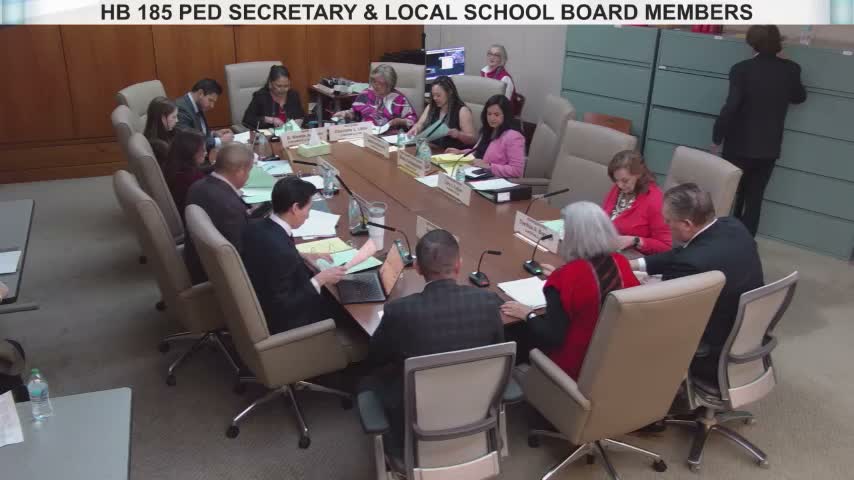
Committee rejects bill that would let education secretary suspend individual school board members
Loading...
Summary
After extensive testimony for and against, the committee voted 4–5 against advancing HB185, a bill that would permit the secretary of public education to suspend individual school board members for specified misconduct while preserving notice and appeal processes.
Legislators on Jan. 3 declined to advance House Bill 185 after a lengthy committee hearing that drew school board members, superintendents and education‑policy advocates on both sides of the question.
HB185 would create a statutory process allowing the secretary of public education to suspend individual school board members for "failure or willful failure to perform duties" required by the Public School Code. Sponsors said the change targets bad actors so the state does not have to suspend an entire board; they described safeguards including written notice, a minimum 30‑day remedial period, and the right to appeal through administrative and judicial channels.
"This isn't about local control; it's about individual accountability," Representative Brian Baca (cosponsor) said, explaining the sponsor’s intent to protect board members who govern responsibly while addressing isolated misconduct.
Opponents — including the New Mexico School Boards Association and multiple current and former board members — urged rejection. "The bill undermines voter intent," Marvin Jaramillo, president of the association, told the committee, arguing the measure risks converting policy disagreements into grounds for suspension and could be weaponized. Joe Guillen, executive director of the association, said the association was not included early in drafting and that existing remedies (recall, board censure, judicial remedies) are sufficient.
Members pressed for clarity about what statutory violations would qualify, whether suspensions could be indefinite, and how this proposal interacts with the current law (which the committee heard permits suspension of entire boards). The sponsor and expert witnesses said the bill is designed to define a targeted process and preserves due process safeguards; an expert cited the Public School Code (chapter 22 NMSA 1978) and related administrative rules as governing authorities.
After debate, the committee took a roll call on a do‑pass motion. The chair announced the result as four votes in favor and five opposed; the do‑pass recommendation therefore failed and HB185 will not advance from this committee.
What happened next: Committee members asked the sponsor to continue dialogue with stakeholders; sponsors said they would revise the bill for future consideration. The transcript records stakeholders asking for a more prescriptive list of violations and clearer timelines for remedial steps.
Why it matters: The bill seeks to change how the state addresses individual misconduct on elected local boards — balancing local control and voter choice against concerns about governance disruptions and accountability.