Committee advances bill letting investor‑owned utilities optionally count avoided greenhouse‑gas benefits in energy‑efficiency tests
Loading...
Summary
The House State Government, Elections and Indian Affairs Committee approved an amendment to HB254 to allow investor‑owned electric utilities to opt in to calculating avoided greenhouse‑gas emissions beyond the utility cost test; the PRC would incorporate that benefit for utilities that elect to calculate it.
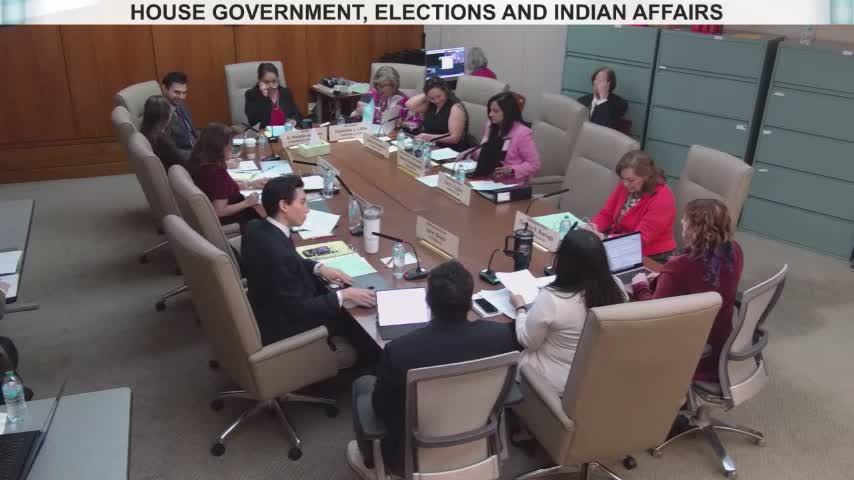
A House committee on Jan. 3 advanced House Bill 254 after the sponsor introduced an amendment allowing investor‑owned electric utilities to voluntarily calculate the benefit of avoided utility greenhouse‑gas emissions beyond the existing utility cost test (UCT).
The amendment, described by the sponsor as optional, adds language that investor‑owned electric utilities may calculate avoided greenhouse‑gas benefits "beyond the utility cost test to demonstrate added value and cost effectiveness of energy efficiency resources." It also directs the Public Regulation Commission (PRC) to incorporate that benefit into cost‑effectiveness determinations for any investor‑owned utility that elects to provide the calculation.
Proponents at the committee hearing said the change merely clarifies the statute so utilities can include emissions reductions when evaluating efficiency programs. "This change will allow us to support the bill," said Mike D'Antonio of Xcel Energy, adding the option would help the company offer more energy‑efficiency programs. Chair Groenhorst of PNM said the bill "gives electric utilities more flexibility to design effective EE portfolios" and does not mandate new programs. Alex Eubanks of the Southwest Energy Efficiency Project told legislators that updating the statute is necessary for the PRC to be able to count emissions reductions in cost‑effectiveness tests.
Advocates also framed the measure as an affordability tool. "When customers save electricity, utilities avoid running higher‑cost resources and emissions go down," Eubanks said, noting efficiency programs can lower monthly bills. Camilla Feibelman, director of the Sierra Club’s Rio Grande chapter, told the committee New Mexico households face a high energy burden and could benefit from expanded efficiency offerings.
Committee members asked technical questions about how the UCT and PRC processes would change. The sponsor’s expert confirmed the amendment is designed to be opt‑in for investor‑owned utilities; if a utility elects to calculate the avoided‑emissions benefit, the PRC must incorporate it into its cost‑effectiveness review.
The committee voted to give HB254 a do‑pass recommendation, sending the amended bill to the House floor for further consideration.
What comes next: The bill, as amended, will go to floor debate where members may consider additional amendments before a final vote.