Get Full Government Meeting Transcripts, Videos, & Alerts Forever!
Get email alerts on the Parks Recreation topic
No spam. Unsubscribe anytime.
Residents press Ross council for full renovation of Ross Common playfield; staff lays out phased options
Summary
Public comment and council discussion overwhelmingly favored a full Ross Common renovation. Public Works presented four options: status quo, enhanced fertilization (~$10k/yr), interim rehab (~$60–70k plus $10k/yr) and full restoration (~$600k–$1M) with phased approaches and maintenance commitments to be detailed at the February CIP discussion.
At the Dec. 17 meeting the council received an extended Public Works briefing and more than a dozen public comments urging the town to restore Ross Common’s playfield rather than continue piecemeal maintenance.
Public Works Director Rich Siminich reviewed the site history, irrigation shortcomings and four options: maintain status quo; a nominal enhanced fertilization and signage program (about $10,000 per year); a modest interim rehabilitation that would remove roughly 17,000 square feet of severely distressed turf and require a 3–4 month closure (roughly $60,000–$70,000 capital plus $10,000 annual fertilization); and a complete restoration, including replacing the top 12 inches of soil and a full irrigation rebuild, estimated at roughly $600,000–$1,000,000 and an 8–10 month construction window plus a 6–8 month establishment period.
Speakers representing the Ross PTO, the Ross Property Owners Association, Little League coaches and parents described safety concerns for children, recurring injuries and the field’s role as the community’s center. "Our children deserve better," said Adrienne Liggett of the Ross School PTO. Several speakers proposed phased construction to preserve partial access; others stressed that without enforcement of dog‑and‑bike restrictions a full investment could be rapidly degraded.
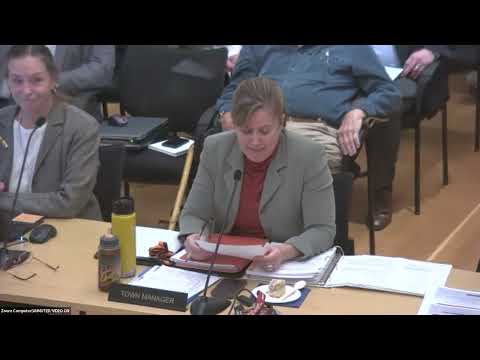
Council discussion acknowledged strong community support and the field’s importance but focused on funding, maintenance commitments and staff capacity. Town manager Krista Johnson and director Siminich said capital funds could come from the council’s CIP reserves, RPOA contributions, donor fundraising or a combination, but emphasized the town lacks assigned staff capacity to manage a large design–bid–build project without additional staffing or consultant help. Staff agreed to return with more detailed phase/cost options and a plan for long‑term maintenance and enforcement to the council’s February CIP meeting.
Ending: Councilmembers signaled a leaning toward comprehensive rehabilitation but did not vote to allocate funds; staff will assess phasing, maintenance obligations and funding scenarios for the February CIP discussion.