Get Full Government Meeting Transcripts, Videos, & Alerts Forever!
Get email alerts on the Budget topic
No spam. Unsubscribe anytime.
Herriman begins early budget discussions, staff recommends grading approach to clarify service levels
Summary
At a Oct. 22 work session, staff urged council to adopt a high‑level, iterative approach to the 2025 budget that grades departmental service levels and models trade‑offs live, citing constrained revenue, rising costs, and pending state mandates.
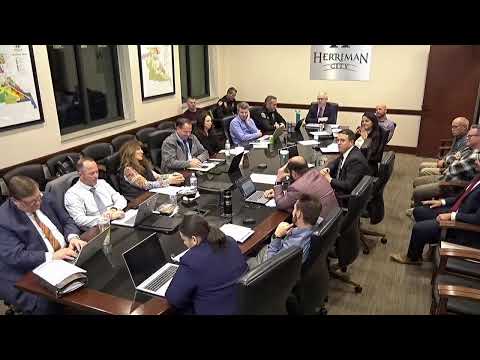
Speaker 3 opened the councilwork sessionwith a high‑level budget kickoff and urged council members to move policy conversations earlier in the process so choices are not made "in a vacuum." He described the exercise as a way to show how changes at the program level would flow into the budget and asked the council to focus first on clarifying priorities and acceptable service levels.
Why it matters: Herriman faces rising capital and operating costs across parks, streets and public safety while revenue growth is uncertain. Speaker 3 cited a Zions study that estimated roughly $3.9 million a year in local sales tax leakage the city does not capture, noted the general fund receives about 50–55% of its revenue from sales tax, and warned that property tax growth depends on development rather than rate increases.
What staff proposed: Rather than immediately adopting a resource‑intensive priority‑based budgeting system, staff presented a simplified "report card" method to rate departments on an A–F scale for core services and to identify where reductions or investments would change outcomes. Speaker 3 said departments that graded lower (parks received the lowest self‑ratings in the exercise) would be the focus for staffing and maintenance investment discussions.
Staff also flagged specific operational constraints, including the physical limits of equipment (how many miles one snowplow can realistically plow), facility capacity at public works, and growing responsibilities from state mandates. Speaker 3 referenced recent legislation ("HB 48") and privacy mandates as reasons the city may need new dedicated positions such as a full‑time emergency manager.
Quotes from the session: "There's no money and not enough money," Speaker 3 said to describe the gap between current resources and service expectations. On capital planning, staff cautioned the council that many projects are interconnected and that limited project‑management capacity will constrain how quickly the city can deliver them.
Next steps: Staff will return with a live model and a more detailed capital view at subsequent meetings, showing funding sources alongside proposed projects and offering scenarios for council direction.