Get Full Government Meeting Transcripts, Videos, & Alerts Forever!
Get email alerts on the 211 Patterson Rezone topic
No spam. Unsubscribe anytime.
Council weighs rezone for 211 Patterson to allow 25-unit youth housing; neighbors seek more engagement before vote
Summary
The council discussed a proposed rezone of 211 Patterson from multifamily R‑4 to R‑5 to allow a 25-unit project by the Ogden Housing Authority targeting youth aging out of foster care. Planning Commission recommended approval 8–0; petitioners requested extra time for neighborhood engagement to meet LIHTC timelines.
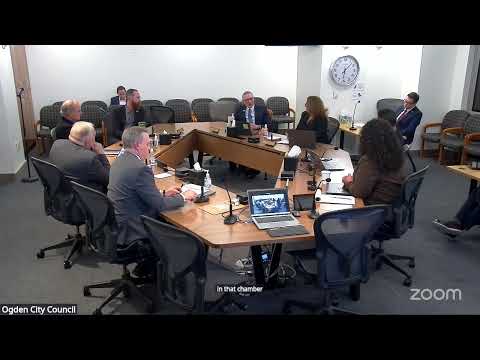
The Ogden City Council on Tuesday examined a rezone request for 211 Patterson Street that would change the property from multifamily R‑4 to multifamily R‑5, a step petitioners say is needed to make a proposed 25‑unit affordable housing project financially viable.
"This is changing the zone of 1 property from a multifamily r 4 to a multifamily r 5," planning staff Joseph Simpson told the council, describing the zoning change as the mechanism needed to accommodate higher density and make the project competitive for tax-credit financing.
Project and purpose: Staff said the site is just over a half-acre in the Jefferson community and abuts a recently completed Ogden Housing Authority (OHA) apartment project to the south. Petitioners said the new building would provide long‑term, supportive one‑bedroom units targeted to youth aging out of foster care and homeless 18–24‑year‑olds; the units would be subsidized to serve 0–30% area‑median‑income households. Youth Futures (the service provider in similar projects) and OHA described on‑site case management, 24‑hour security and rules-based resident agreements.
Demand and capacity: Kristen Mitchell of Youth Futures said the balance‑of‑state currently has only 11 units serving this age group and that the proposed project would help meet a state‑level shortage. OHA representatives said a 12‑unit project previously pursued was not competitive for Low‑Income Housing Tax Credits (LIHTC); investors typically seek larger projects, and staff said a 25‑unit project improves feasibility.
Neighborhood concerns and mitigation: Several residents and Council Member Lopez (spoken as a neighborhood representative) urged additional neighborhood improvements — lighting, sanitation, staffing and a comprehensive improvement plan — before final action. One resident asked the administration to "put a comprehensive improvement plan in place" addressing traffic, lighting and safety before approving the rezone.
Administration response: The mayor and OHA said they are willing to engage further. Mayor Darren asked for a short period for deeper neighborhood engagement and said staff could bring site‑specific mitigation options (lighting, vegetation management, targeted visibility improvements, and coordinated entry with service providers and public safety) back to council. Tim Price of the Ogden Housing Authority said the authority is willing to be "part of the solution" and engage with neighbors.
Timing and procedural posture: Planning Commission recommended approval (8–0). Petitioners said LIHTC and investor timelines mean they need direction soon: tax‑credit applications are due in mid‑April to May, and petitioners flagged mid‑February as a practical 'drop‑dead' for major schedule decisions. The council will have the rezone on next week’s agenda (it was previously tabled) and leadership asked administration to present options — vote, table to a date‑certain with renotice, or extend for additional outreach.
What happens next: Staff will prepare options for the council at next week’s work session. If the council chooses to delay, petitioners warned that LIHTC timing may force them to defer to the next application cycle.