Get Full Government Meeting Transcripts, Videos, & Alerts Forever!
Get email alerts on the Housing topic
No spam. Unsubscribe anytime.
CRA amends ADU construction loan term sheet, removes right of first refusal and partial forgiveness
Summary
The CRA board adopted a resolution to amend its accessory dwelling unit construction loan program term sheet: staff recommended removing a carryover right of first refusal and eliminating a 10% partial loan forgiveness to preserve revolving funds; the motion passed unanimously.
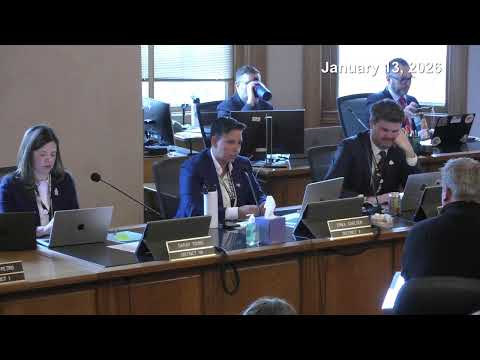
Salt Lake City’s Community Reinvestment Agency board voted to amend the accessory dwelling unit (ADU) construction loan program term sheet at its Jan. 13 meeting, removing two provisions the agency said were no longer necessary: a right of first refusal on borrower homes and a partial loan forgiveness feature.
Project staff told the board the program, managed by a partner selected through the 2024 NOFA (the Community Development Corporation of Utah), is funded at $2,900,000 and expected to finance about 15–20 ADUs in the pilot round. Loan terms reviewed for the board include loans up to $200,000, a 30-year amortization schedule, five-year terms with one five-year extension, a 3% fixed interest rate and a $2,000 origination fee. Staff said removing the 10% forgiveness will preserve revolving capital to fund additional ADUs and avoid creating taxable events for borrowers.
A project manager said the forgiveness provision was originally proposed but staff’s financial modeling showed borrowers could operate ADUs under the rent restrictions without needing forgiveness. "10% of the loan balance would be forgiven on the close out of the loan," the presenter said, and later added that modeling showed market rents in targeted neighborhoods ran closer to 55% of area median income, making the forgiveness unnecessary. After brief board discussion and a motion to adopt the resolution, the board voted unanimously to amend and restate the program terms.
The board placed the appointment of program partners and individual applicants on the consent agenda for final administrative approvals later in the meeting.