Get Full Government Meeting Transcripts, Videos, & Alerts Forever!
Get email alerts on the Grants Surveillance topic
No spam. Unsubscribe anytime.
Salt Lake City Council closes grant hearing after residents oppose surveillance funding; items B1–B5 sent to consent agenda
Summary
After hours of public comment driven by privacy and immigration concerns, the council closed a hearing on five grant applications (B1–B5) and referred them to a future consent agenda. Speakers repeatedly urged rejection of B1, which commenters linked to automated license plate readers and federal policing.
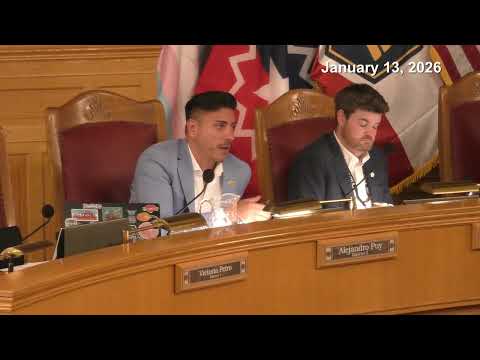
The Salt Lake City Council on Jan. 13 closed a public hearing on five grant applications after an extended public-comment period in which residents urged the council to reject any grants tied to surveillance technology or federal immigration enforcement.
Austin Kimel, a council policy analyst, had introduced the grants (items B1–B5), describing them collectively as applications the city had submitted to fund local programs. He said the applications included an Office of Justice Programs community-based violence intervention and prevention grant that — if approved — would fund two full-time analysts for the real-time crime center, travel, training, equipment and a consultant from the National Network for Safer Communities; a law-enforcement-based victim services mini-grant; a 2025 DUI enforcement equipment grant for portable breath testers; a Surface Transportation Program project to reconstruct Caraway Roadway (Foothill Drive to Aeropine Drive); and a Congestion Mitigation/Air Quality (carbon reduction) project to fund a roundabout in the University of Utah Research Park.
Public commenters focused heavily on item B1. Isaiah Rodriguez, a Salt Lake City resident from Glendale, told the council: "You guys should vote no on B1," saying B1's description includes funding for automated license plate readers and raising privacy and effectiveness concerns. MJ Powell, another commenter, linked the city's acceptance of federal Department of Justice funding to accountability questions and warned officials that constituents would remember grant votes in future elections.
Others echoed those objections in the chamber and over Zoom, raising two recurring points: first, that ALPRs and similar surveillance tools pose privacy and data-security risks, and second, that the city's acceptance of federal funding can entangle local programs with agencies or operators that community members distrust. Several commenters invoked recent national incidents to argue the city should refuse funds tied to federal enforcement.
After the public comments, an unidentified council member moved to close the hearing and refer items B1–B5 to a future consent agenda; the motion was seconded and the chair called the question. Council member clarifications followed: an unidentified council member noted that "B1 refers to the license plate readers, and they currently that is on pause. That is not included in this vote." The motion closing the hearing and referring the items carried unanimously.
What happens next: The items will be scheduled for the consent agenda at a future council meeting for possible final action; the council did not vote on the grants themselves at this session.