Get Full Government Meeting Transcripts, Videos, & Alerts Forever!
Get email alerts on the Ibogaine Clinical Trials topic
No spam. Unsubscribe anytime.
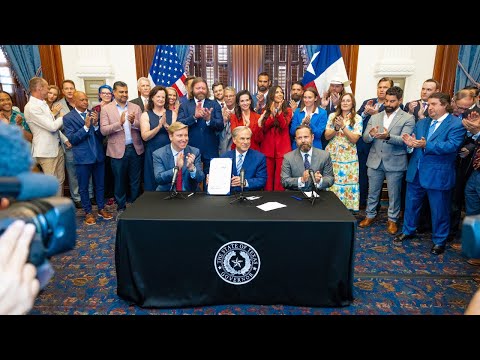
Gov. Abbott signs law to fund $50 million for ibogaine clinical trials aimed at veterans' care
Summary
Governor Greg Abbott signed a law directing Texas to invest $50,000,000 to support research and matched clinical trials of ibogaine for opioid use disorder and other behavioral‑health conditions; state Health and Human Services will begin accepting consortium proposals within 60 days.
Governor Greg Abbott signed a law directing Texas to invest $50,000,000 to support research into ibogaine and to accelerate FDA‑approved clinical trials for treating opioid use disorder and other behavioral‑health conditions.
"An FDA clinical drug trial is needed for Ibogaine," Abbott said during a signing ceremony, and he added that the state investment "can be matched by grants and private investments." Abbott framed the measure as aimed particularly at veterans, saying many suffer from "depression, PTSD, and opioid use disorder."
Speaker Burrows, who introduced the bill in the House, said he and other lawmakers were persuaded by testimony from veterans and advocates. "When you actually hear from people and people come to these chambers, it makes an impact," he said, thanking colleagues and advocates who pushed the effort forward.
Senator Tam Parker, a sponsor in the Senate, said the effort is "about restoration" and described ibogaine as a potential therapy that could increase neuroplasticity and produce structural benefits beyond short‑term effects. Parker said the law tasks the Texas Health and Human Services agency to begin accepting proposals within 60 days from consortiums composed of a Texas medical school, a hospital and a drug developer, and that state funds would be released only when matched by private contributors.
Abbott and Parker both emphasized that the initiative is intended as a medical treatment rather than recreational drug use. "We view this as a medical treatment to be administered by doctors who are entrained in it," Abbott said. Parker added, "Completely different from anything recreational," and described plans for regulated administration in hospital settings with appropriate cardiac capabilities.
Reporters asked about related public‑safety preparations. Abbott said Texas would "use every tool that we can to ensure order," including deployments of Texas Department of Public Safety officers and the Texas National Guard in strategic locations, but he declined to disclose troop numbers or tactical details. When pressed about what constitutes crossing the line, Abbott said that damaging property or harming individuals is a violation of the law and stated, "You will be arrested."
The next procedural step under the law is for Health and Human Services to solicit and review consortium proposals within the 60‑day window set by the statute; any clinical trials would still require FDA approval before wider clinical use. The signing concluded with brief remarks of thanks from sponsors and attendees.