Get Full Government Meeting Transcripts, Videos, & Alerts Forever!
Get email alerts on the Roads topic
No spam. Unsubscribe anytime.
Salt Lake City kicks off third annual 'Pothole Palooza' with new truck and faster repairs
Summary
Salt Lake City launched its third annual Pothole Palooza, mobilizing crews to inspect 1,905 lane miles and replicate last year’s effort of 6,759 potholes filled; officials encouraged residents to report potholes via the My SLC app or (801) 535-2345.
Madam Mayor (name not specified in the transcript) and city staff on site announced the city’s third annual Pothole Palooza, a weeklong push to accelerate pothole repairs across Salt Lake City’s 1,905 lane miles. The mayor said crews would try to at least match last year’s Pothole Palooza output: "Last year, during Pothole Palooza alone ... our crews filled 6,759 potholes last year."
Jorge Chamorro, director of public services, explained why the concentrated effort is needed, pointing to this winter’s wet conditions and the freeze-thaw cycle that increase pothole formation. "We have a goal that between 48 and 72 hours that pothole gets filled," Chamorro said of routine response times; he added that during Pothole Palooza the city dedicates all available crews to pothole repair so reports are dispatched nearly immediately.
City officials highlighted tools for residents to report problems: the My SLC mobile app and a phone line, (801) 535-2345. Chamorro directed residents to the city’s interactive map at slc.gov/mystreet to see live tracking of the week’s repairs. The administration also noted the app has been renamed/updated this year to improve reporting convenience.
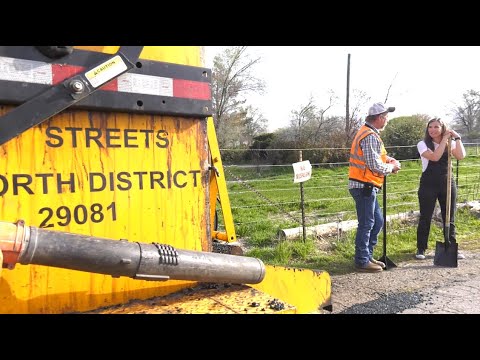
Officials unveiled a new multi-function patch truck that combines an air compressor, jackhammer and compactor on a single vehicle, a change intended to reduce support vehicles and speed repairs. The mayor described the vehicle as the city’s first of its kind and "I think it's only the second ever in the country." The city did not provide independent verification of the claim at the event.
On questions about resurfacing materials, Chamorro said annual assessments guide whether to reconstruct roads in concrete or asphalt. He explained that concrete can require less maintenance long term for heavily used streets, while asphalt is often a more cost-effective choice for lower-traffic roads. He also said the city reuses reclaimed asphalt in some surface treatments as part of efforts to reduce new raw material use.
When asked whether SB 195 affects routine road repairs, the mayor said that SB 195 "does not apply" to road maintenance and repairs and that the city is not changing roadway treatments for this work.
The event closed with officials encouraging residents to report potholes and inviting the public to observe crews at work.
The city did not take any formal votes at the event; it presented operational details and instructions for reporting problems as the immediate next steps.