Get Full Government Meeting Transcripts, Videos, & Alerts Forever!
Get email alerts on the Reusable Foodware Policy topic
No spam. Unsubscribe anytime.
Livermore workshop previews reusable‑foodware rules, cites business savings and large waste reductions
Summary
City of Livermore hosted a workshop where StopWaste, Rethink Disposable and a consultant presented a reuse‑first policy package, local survey results and case studies that show cost savings for most businesses and substantial reductions in single‑use waste. The city plans to bring recommendations to council in spring next year.
City of Livermore recycling staff convened a public workshop to gather feedback on a proposed reusable‑foodware policy package that would require reusable dishes for on‑site dining, require acceptance of clean BYO containers, and encourage defaulting to accessories only on request.
Anna Zamponga, the city’s recycling specialist, opened the session and said the workshop is meant to help shape programs and policies to “promote reuse for our local businesses [and] prevent litter in our community.” She told attendees the city is collecting feedback through a survey that closes Sept. 30 and expects to present recommended policies to the Livermore City Council in the spring.
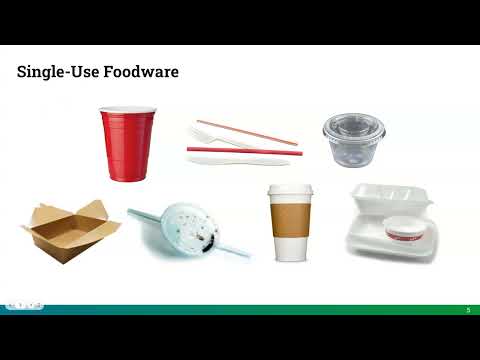
Justin Lehrer, operations manager at StopWaste, described why the agency and the city are focusing on disposable foodware, saying much single‑use packaging is effectively nonrecyclable in practice because sorting facilities and end markets cannot handle small, food‑contaminated items. “There are a number of issues — they range from litter to challenges with collection and sorting,” Lehrer said, noting that contamination can also lead to violations of state and county recycling rules.
Lehrer and presenters emphasized that compostable alternatives also present challenges: many fiber items and compostable plastics do not break down fully at local industrial composting facilities, meaning they may be screened out and landfilled. Lehrer cited state legislation expected to clarify definitions of recyclable and compostable items and framed reuse as having clear climate advantages, referencing reuse‑focused lifecycle work showing ceramic, stainless and glass reusables have lower greenhouse‑gas impacts than many single‑use cups.
Julie Wedge, California state director for the Rethink Disposable program, described business assistance and case studies in the Bay Area and Southern California. Wedge said her team has found consistent cost savings for participating businesses and cited a large conversion at a Gurdwara Temple that removed roughly 600,000 disposable items from the waste stream and achieved about $45,900 in annual savings. “We found that, around the Bay Area, 73% of the waste that we see in the streets … is disposable food waste,” Wedge said, and urged local food businesses to take advantage of technical assistance and small grants.
Miriam Gordon, who has consulted with the city of Livermore, reviewed a draft policy package based on a StopWaste model ordinance and local examples. Key proposals include: - Requiring reusable foodware for dine‑in service (plates, cups, utensils, bowls; limited exceptions such as burrito wrappers and tray liners). - Requiring businesses to accept a customer’s clean BYO container for takeout when it is fit for purpose. - Requiring accessories (utensils, condiments, napkins) be provided only on request, with medical exemptions (for example, sealed condiments for some customers). - An optional takeout disposable charge (25¢ per disposable cup or container, up to $1 per order) with exemptions to protect recipients of food assistance and Medi‑Cal beneficiaries. Gordon said the city would provide an 18‑month lead time for compliance and offer technical support, grant opportunities and a maintained list of compliant disposable products.
Gordon presented a modeling exercise based on about 31 early survey responses and a projected 195 businesses in Livermore that could be affected. The modeling showed that requiring accessories on request and promoting on‑site reuse generally yield per‑restaurant cost savings (Gordon cited an average annual saving of roughly $5,600 in some analyses) and substantial reductions in the number of disposable items and pounds of waste. She cautioned that converting to compostable takeout foodware could increase costs for some sectors, especially fast‑food operators, unless accompanied by full reuse conversions.
Workshop presenters repeatedly directed businesses to available resources: StopWaste and Rethink Disposable offer technical assistance, mini grants (typical starter grants in the presentation were described in the low hundreds of dollars) and vendor lists. Wedge offered to arrange assessments: “I’m happy to send somebody to do an assessment of your foodware,” she said.
Anna Zamponga closed by opening a 30‑minute Q&A, pausing the recording to allow public comment, and describing next steps: the city will post the recording and related materials on a reusable‑readiness landing page, continue outreach, and analyze survey results to inform the spring council package. City staff provided a contact point for follow‑up (solidwaste_recycling@livermoreca.gov).