Get Full Government Meeting Transcripts, Videos, & Alerts Forever!
Get email alerts on the Legislative Session Tracking topic
No spam. Unsubscribe anytime.
Herriman podcast explains how city tracks Utah—s 45-day legislative sprint
Summary
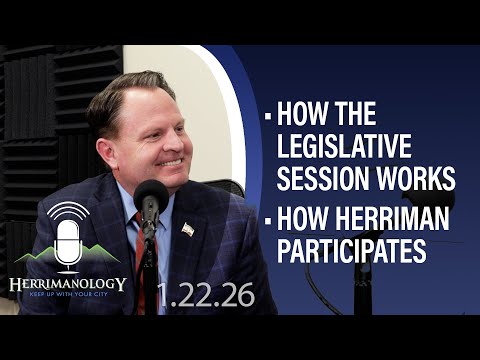
On the Jan. 22 episode of the Herriman podcast, hosts outlined how Herriman monitors the Utah Legislature—s 45-day session, how the Utah League of Cities and Towns—policy committee forms positions, and how residents can testify (including virtually). The episode also noted local event coverage plans.
Speaker 1, a podcast host and the second vice president of the Utah League of Cities and Towns, told listeners that the Utah legislative session is short and intense: "It's 45 days. It's a sprint." The hosts described how Herriman and other cities monitor hundreds of bills and coordinate responses through the League and city staff.
The podcast laid out the mechanics the hosts said the city uses to follow legislation. Speaker 1 said the League's legislative policy committee meets weekly and that "every city that belongs to the league can send 3 members, and you become the voting member"; member cities ratify or debate positions on bills tracked by league staff. Speaker 3 added that committee hearings are a key opportunity for residents to weigh in: "That's, in my opinion, probably the best time for public comment."
Hosts emphasized the volume and reach of bills this session. Speaker 1 said officials were already tracking "over 500" bills that could affect areas such as property taxes, water, data privacy, housing and public safety. The podcast stressed that not every bill affects municipal authority, but some are consequential enough that Herriman staff and elected leaders take positions and, when possible, work with authors to amend language.
The episode explained the legislative path the hosts described: an introduced bill (House Bill or Senate Bill) is assigned to a committee; if approved, it returns for second and third readings in its chamber and, if passed by both chambers, proceeds to the governor. Speaker 3 described the committee stage as the most practical moment for citizen testimony because committees often allow in-person and remote comment.
On remote participation, Speaker 1 said most Utah committees now allow virtual testimony, making it easier for Herriman residents to make their views known without traveling to the Utah State Capitol: "You can actually testify virtually right now." The hosts encouraged residents who see bills that could affect them to contact the city so staff can track concerns.
The podcast also described how Herriman assigns department leads to monitor subject-matter bills (communications tracks data- and social-media bills; water and building staff watch infrastructure measures) and budgets for a lobbying team to supplement staff presence at the Capitol. "Texts are flying. Calls are flying constantly," Speaker 1 said, describing the real-time coordination during busy committee days.
The hosts closed with a short community note: the multi-stage Yeti Hunt concludes Monday and a news station had expressed interest in covering the event. They invited listeners to contact the city communications office (communications@herriman.gov) with questions and said the podcast will return with future updates.
The podcast episode focuses on process and civic engagement rather than any single bill; listeners seeking to comment on a specific proposal were told to check committee schedules and the League's bill tracker or to contact city staff for guidance.