Get Full Government Meeting Transcripts, Videos, & Alerts Forever!
Get email alerts on the Transportation topic
No spam. Unsubscribe anytime.
Herriman reviews updated Transportation Master Plan; staff says impact fees will fall about 30%
Summary
City and consultant reviewed a 200‑page Transportation Master Plan and accompanying impact fee analysis; staff told council recent public infrastructure districts and jurisdictional transfers reduce impact‑fee eligibility, lowering projected impact‑fee revenue by about 30% and prompting CIP adjustments.
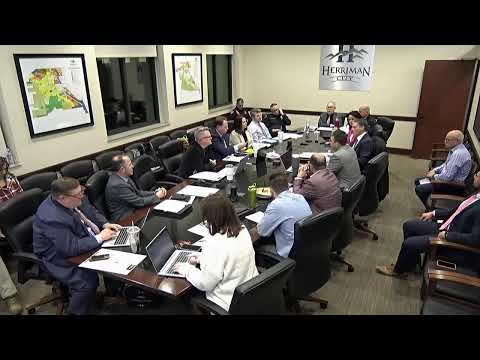
Consultant Jeremy Searls of WCG and Herriman staff presented the city’s Transportation Master Plan update and Transportation Impact Fee Facilities Plan during the Jan. 14 work meeting, telling council the package is intended to guide project phasing and the capital facilities plan for the next 10–30 years.
"This is kind of the last check‑in with council to get last feedback before we come back for final adoption," Jeremy Searls said, noting the plan is roughly 200 pages and that staff created an interactive story map to highlight projects and phasing. The plan separates projects into three phases (phase 1 = next 10 years) and lists intersection and roadway projects the city expects to pursue.
Staff and the consultant explained that only projects in the six‑to‑ten‑year window of the Transportation Impact Fee Facilities Plan can be charged to impact fees, and state law limits the portion of a project that can be recovered by impact fees to the capacity attributable to new development. The presentation listed how new public infrastructure districts (PIDs), jurisdictional transfers to UDOT, and changes to annexation assumptions have reduced the amount of road cost that is impact‑fee‑eligible.
Bryce, a staff presenter, said those changes have driven an estimated 30% reduction in the city’s impact‑fee calculation. Councilors asked about the implications for project funding, fairness to existing residents, and the timing for adoption. Staff said the plan will go to the Planning Commission for recommendation and then return to the council; they tentatively expect a Planning Commission hearing in February and council final adoption around the first meeting in March.
Council members also discussed how an updated UDOT widening schedule for an arterial (initially modeled as a 3‑lane project) changes local modeling when the state secures additional funding and decides to widen it to five lanes earlier than previously planned. Staff said the master plan will be updated to reflect that UDOT change before final adoption.
Next steps: staff will send the draft plan to Planning Commission, update phasing to reflect UDOT’s revised design, and return to council for final adoption and the formal impact‑fee ordinance.