Get Full Government Meeting Transcripts, Videos, & Alerts Forever!
Get email alerts on the Funding Compliance topic
No spam. Unsubscribe anytime.
Key NOFA funding rules, compliance triggers and caps applicants must know
Summary
City of Dallas housing staff summarized funding rules for NOFA applicants: HOME and CDBG program minimums and triggers (Davis‑Bacon, Section 3), affordability period thresholds, MWBE subcontracting expectations, a 25%/$5M NOFA award cap with listed exceptions, and developer fees for underwriting and legal services.
City of Dallas Housing Department staff used a recorded NOFA presubmission presentation to walk applicants through the funding sources, compliance triggers and administrative changes that affect NOFA proposals.
The presenter reviewed federal program rules tied to NOFA awards: HOME typically requires a minimum five‑unit threshold and targets households up to 80% of area median income; staff said Davis‑Bacon prevailing wage requirements are triggered at 12 units and that $100,000 of investment triggers Section 3 monitoring requirements. “Once you hit 12 units, you trigger Davis Bacon, and then a hundred thousand dollars in investment triggers section 3,” the presenter said.
Affordability periods and CDBG: staff explained CDBG affordability periods that scale with per‑unit investment—under $15,000 per unit triggers a five‑year affordability period, $15,000–$40,000 triggers ten years, over $40,000 triggers 15 years, and new rental construction typically requires 20 years of affordability.
MWBE and subcontracting goals: the presenter said the city tracks MWBE participation and expects developers to make a good‑faith effort to subcontract roughly one‑third of work to certified MWBEs; certification must be documented to earn points in scoring.
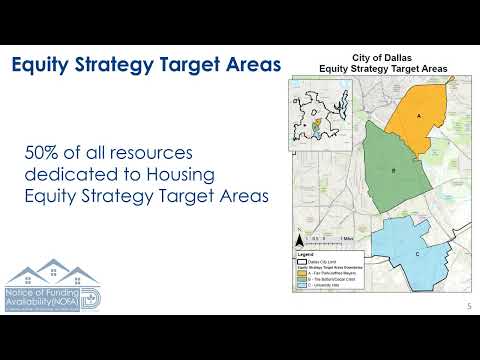
Funding caps and fee responsibilities: staff announced a new administrative cap on NOFA awards—25% of total development cost or $5,000,000, whichever is less—while noting exceptions for projects in ESTAs or those that leverage partnerships with entities like DART, the Housing Authority or DISD. The presenter also said developers must pay underwriting fees when selected and legal fees within 10 days of council approval; those fees are held by a third‑party attorney and reconciled at contract signing.
Why it matters: these compliance triggers and administrative changes affect project budgets, subcontracting plans and timelines. Developers should factor Davis‑Bacon and Section 3 thresholds into cost estimates, include required affordability periods in pro formas and plan for upfront underwriting and legal fee payments.
Next actions: staff recommended applicants consult the NOFA application and check the department website for the latest funding totals; contact information and staff emails are listed on the NOFA page.