Get Full Government Meeting Transcripts, Videos, & Alerts Forever!
Get email alerts on the Homelessness Public Safety topic
No spam. Unsubscribe anytime.
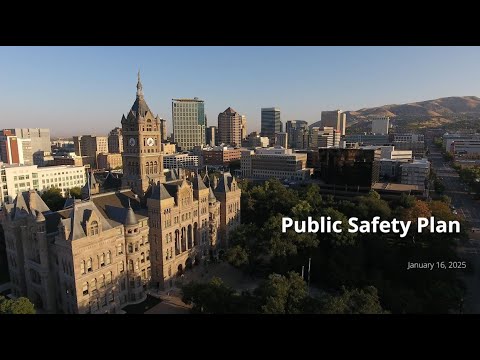
Salt Lake City mayor unveils 27-action public safety plan, offers temporary shelter campus and $5M for housing
Summary
Salt Lake City’s mayor released a 50‑page public safety plan addressing homelessness and public-order concerns, proposing 27 city actions and 23 recommendations for state partners, including a temporary city‑owned shelter campus for up to 24 months and a $5 million FY2026 commitment to deeply affordable housing.
Salt Lake City’s mayor announced a comprehensive public safety plan aimed at addressing homelessness and public-order problems, saying the city will pursue 27 actions it can take immediately and has sent 23 recommendations to state partners.
The mayor said the plan was produced after more than 200 interviews and surveys and concluded that the system’s central problem is a lack of space — for housing, shelter, treatment and jail capacity. "We must intentionally and immediately create space," the mayor said, adding an estimated shortage of "1,100 to 1,600 year-round emergency shelter beds." The city transmitted the plan to state leaders after receiving a written invitation from Governor Cox, President Adams and Speaker Schultz to propose collaborative solutions.
Why it matters: City officials framed the plan as both a set of immediate municipal actions and a toolkit that requires state and philanthropic funding and policy changes to work. The mayor said the plan is not "an à la carte menu" and urged partners to adopt the recommendations in full to avoid continued street-level humanitarian and public-safety failures.
Key commitments and programs in the announcement include: an offer to make a city‑owned property available for a temporary campus facility for up to 24 months if state and philanthropic partners fund operating costs; expedited support for the next phase of the Other Side Village project, adding more than 200 deeply affordable tiny homes; and a city pledge to dedicate at least $5,000,000 for deeply affordable housing projects in fiscal year 2026.
On public safety, the mayor said the Salt Lake City Police Department and embedded behavioral health clinicians helped reduce overall crime by 5% in 2024 compared with 2023, reaching a 16‑year low. The mayor said the city will increase visible policing downtown and in higher‑crime areas by launching a "community impact division" that redirects bike and patrol squads to targeted hot spots including the Jordan River Trail and Ballpark neighborhoods. A violent crime apprehension team (VCAT) will focus on fentanyl and firearm offenses, and the city will seek closer coordination with prosecutors and judges to increase consequences for repeat offenders.
The plan also proposes nonlaw enforcement measures: an expanded rapid intervention team to address trash, bio‑waste and abandoned buildings; a request for proposals to increase hygiene services for people who are unsheltered; and increased secure storage for unsheltered people’s possessions to reduce theft and remove a barrier to entering shelter.
The mayor described the shelter shortage and enforcement actions as complementary: "Being unsheltered is not a crime. But public safety matters and homelessness do intersect," she said, adding that the city "cannot police our way out of homelessness, but we can make the public feel safer as we expand system resources."
There were no formal votes or actions taken at the briefing. The mayor declined on‑the‑spot questions and said follow‑ups would be scheduled; hard copies and PDFs of the plan will be distributed.
What to watch next: the mayor said implementation will depend on state funding and legislative changes the plan recommends, and that the city will work with legislators in the upcoming session to pursue those measures. The city also asked partners to help fund the temporary campus’s operating costs and pledged to track actions transparently.