Get Full Government Meeting Transcripts, Videos, & Alerts Forever!
Get email alerts on the Education Reform topic
No spam. Unsubscribe anytime.
Davis School District official outlines High Reliability Schools approach to improve student outcomes
Summary
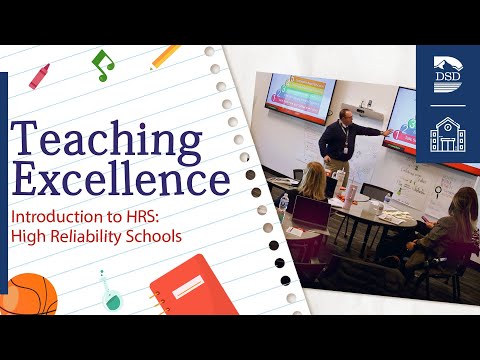
TJ Strain, Davis School District's director of teaching and learning, described the High Reliability Schools (HRS) framework, its origins, how schools in the district are implementing it, and what district leaders expect from schools.
TJ Strain, director of teaching and learning for Davis School District, described the district's adoption of the High Reliability Schools (HRS) improvement framework and how it is being used to focus school practice.
Strain said he first encountered HRS after his initial year as principal at Legacy Junior High and began researching the model. "High Reliability Schools was developed by Bob Marzano and Phil Warrick, around 2014," he said, adding that "High Reliability Schools ... is a measurement process to make sure that we're doing what is best for students." He said the district has observed changes in administrators, faculty and students since starting the process: "We started to see changes in ourselves, but also changes in our faculty. We started to see changes in our students."
Explaining how the model works in practice, Strain said the improvement process begins at the school level with an assessment of the first level: a safe, supportive and collaborative environment. Schools, he said, ask questions of parents, teachers, students and administration, then break feedback into concrete steps for improvement. Strain used a metaphor to describe the approach: "Think of it as a dresser drawer. We really take the things that we do in education ... and we put it in its proper place."
Strain praised "Superintendent Linford's vision and direction" for the initiative and emphasized that the district treats HRS as an expectation rather than a rigid mandate: "It's not a mandate to all the schools that they have to perform at a certain level, but it is an expectation that we're all moving in this direction." He said the organizational focus allows schools to concentrate on "2 or 3 things at a school wide level that will really affect student outcomes and student data."
Strain portrayed HRS as a practical, school-level strategy for organizing instructional priorities and tracking improvement. He said the framework guides schools to identify priority areas, gather stakeholder feedback and sequence small, measurable steps aimed at improving outcomes. The presentation did not include specific school-by-school results, timelines for districtwide adoption, or any formal vote or policy action.