Get Full Government Meeting Transcripts, Videos, & Alerts Forever!
Get email alerts on the Transportation topic
No spam. Unsubscribe anytime.
VDOT outlines multi‑year road, bridge and pedestrian projects for Stafford County
Summary
A VDOT Fredericksburg residency engineer told the Stafford Board of Supervisors about scoping for the Falmouth Bridge, widening on Leland Road, a Shelton Shop Road roundabout and a 151‑lane‑mile resurfacing plan, with construction windows from 2026 to 2031.
STAFFORD COUNTY, Va. — A VDOT presentation at the Board of Supervisors meeting on Sept. 1 mapped a slate of transportation projects across Stafford, including bridge work, widening, pedestrian improvements and a large resurfacing contract covering 151 lane miles.
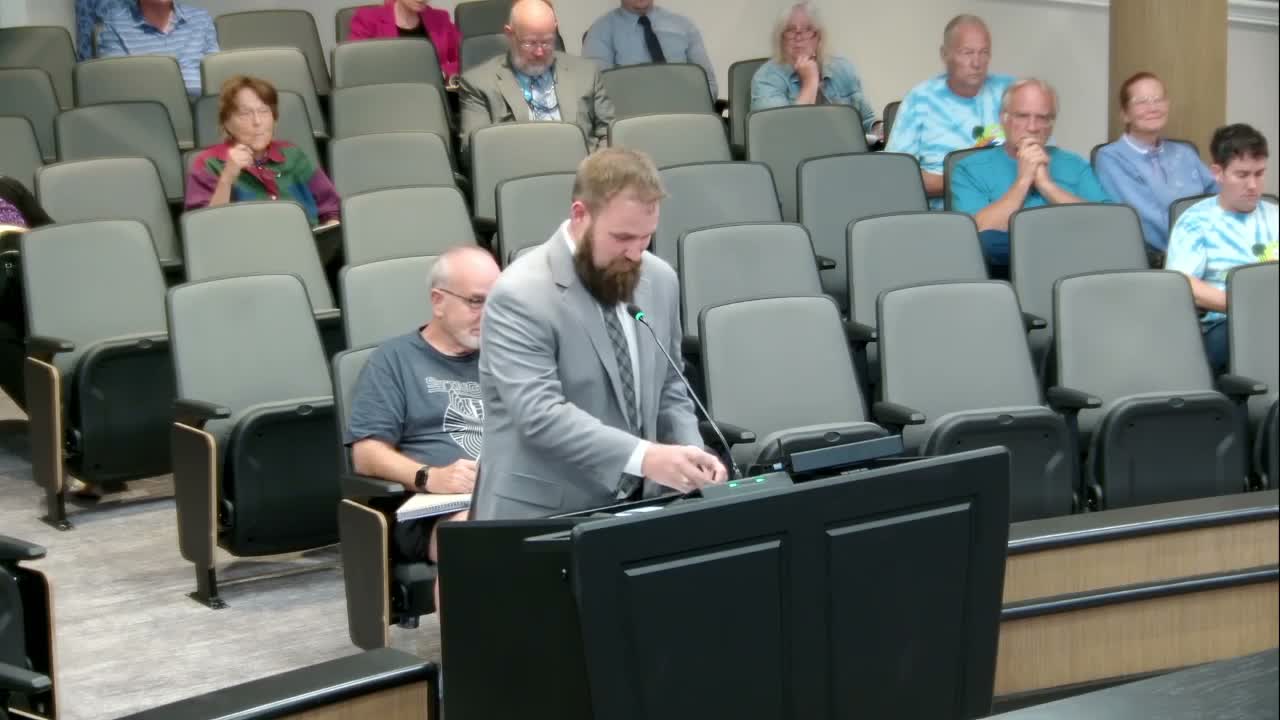
Kyle Bates, VDOT resident engineer, said the Falmouth Bridge (Route 1 over the Rappahannock) is in phase‑one scoping and that alternatives under study include a deck replacement or superstructure replacement and the possible inclusion of a shared‑use path. Bates told the board the goal is to move into design work next year.
He summarized other projects and timing: Route 626 (Leland Road) widening with sidewalks and a dual left/turn lane (construction targeted for 2028); Shelton Shop Road improvements that would include a roundabout and intersection work (anticipated 2030–31 and with public hearings scheduled in the coming months); and a bridge replacement at Rock Hill Church (construction expected 2026–27). Bates also listed smaller pedestrian and safety improvements — three rapid‑flashing beacons and refuge islands on Parkway Boulevard — and a FY26 resurfacing program covering roughly 151 lane miles in Stafford.
Supervisors asked about signal timing, speeding and shoulder widths on specific corridors; Bates said VDOT does corridor reviews, responds to public complaints and uses data such as 7‑day speed studies to determine traffic‑calming eligibility. He also noted a new contract mechanism for lower‑volume subdivisions that could begin as early as October and run into late 2026.
What's next: Bates encouraged the public to attend upcoming hearings on several projects; specific construction schedules and public‑outreach dates will be posted as the projects move from scoping to design and right‑of‑way phases.