Get Full Government Meeting Transcripts, Videos, & Alerts Forever!
Get email alerts on the Data Centers topic
No spam. Unsubscribe anytime.
Hundreds of Stafford residents press Supervisors to advance tighter data‑center rules and larger setbacks
Summary
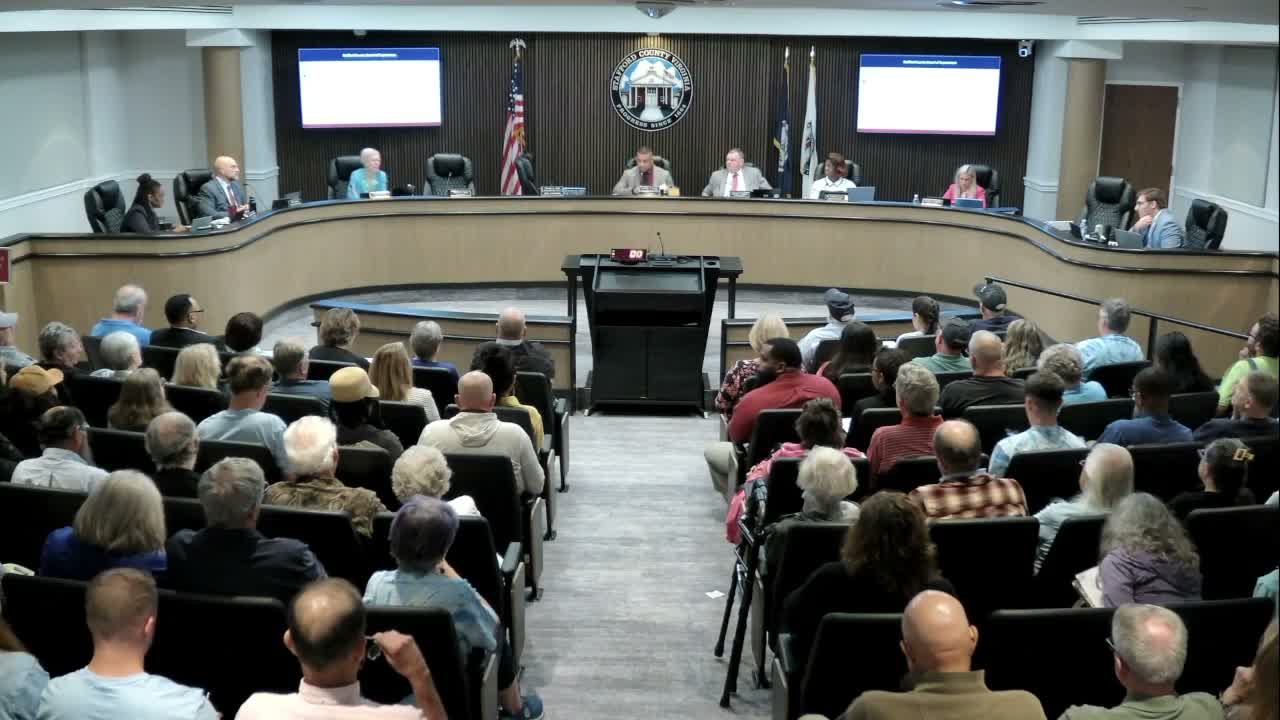
Hundreds turned out at the Aug. 19 Stafford County Board of Supervisors meeting urging the board to advertise a joint public hearing on Planning Commission data‑center recommendations and to adopt setbacks between 500–1,000+ feet from homes, schools and waterways.
Hundreds of residents filled Stafford County’s board chambers on Aug. 19 to press the Board of Supervisors for stricter rules on proposed data‑center development, calling for a joint public hearing with the Planning Commission and larger setbacks of 500 to 1,000 feet or more from homes, schools and sensitive waterways.
Speakers from the George Washington District and other parts of southern Stafford described the scale of applications now pending and warned of impacts on groundwater, the Rappahannock and Potomac rivers, noise and air emissions from diesel backup generators, and property values. “Vote tonight to advertise and hold a joint public hearing with the Planning Commission on the newly revised data‑center standards,” Lillian Swain told the board, urging supervisors not to delay (Lillian Swain, public comment).
Planning staff later presented the Planning Commission subcommittee’s recommended amendments to the comprehensive plan and zoning ordinance. Director of Planning and Zoning Mike Sarraf and planner Brian Gooch summarized changes that would steer data centers closer to transmission corridors, strengthen on‑site design and tree‑preservation requirements, require view‑shed and low‑frequency noise analyses, limit generator running/testing windows and set decibel limits (a proposed 55 dBA maximum at campus boundaries), and increase vegetative buffers and open‑space requirements outside the urban services area.
The Planning Commission’s recommendations would raise the principal‑building setback where a data center abuts a residential use, school, or the Rappahannock or Potomac Rivers to 500 feet and add a 300‑foot setback for accessory uses such as substations and parking. Staff also recommended requiring documentation from electric providers on load availability and discouraging potable groundwater for cooling.
Board members debated the technical details throughout the evening. Some supervisors and many residents argued the Planning Commission’s 500‑foot recommendation was too small; several speakers advocated for 1,000 feet (or more) and for explicit protections against groundwater depletion and generator emissions. Others on the board urged more technical vetting — asking for noise, water and environmental consultants and electricity‑provider analysis — before locking in a single setback distance.
After extended discussion the board voted 4–3 to defer action and hold a board work session next Tuesday to review the ordinance language and technical questions before deciding whether to advertise a joint public hearing with the Planning Commission. Vice Chair Allen, who favored more technical review, said a work session would give the board time to align on “shall vs. should” wording, enforcement steps and fiscal implications.
What’s next: the board scheduled a work session to review the proposed ordinance language and technical analyses. Staff and Planning Commission members told the board they can reconvene the public‑hearing process after the work session; members who want an earlier public hearing noted that advertising deadlines could limit how quickly the board can act.